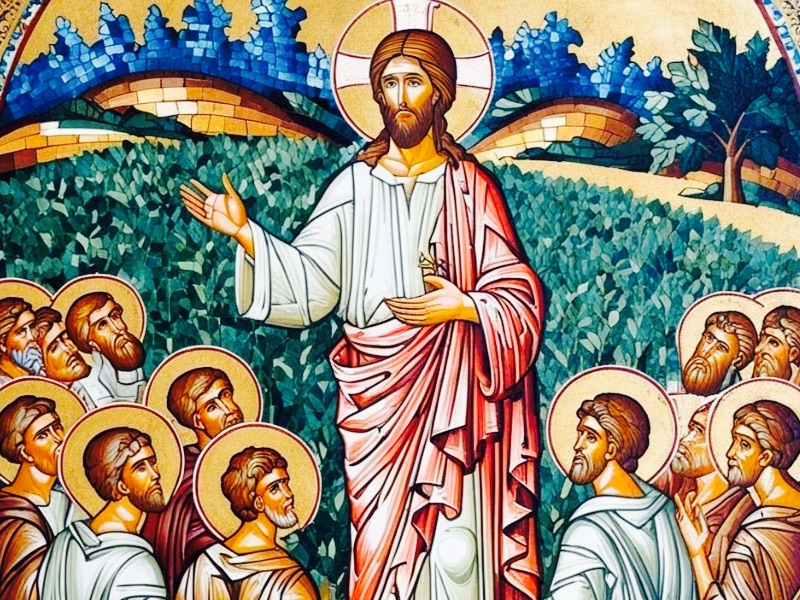
Much has been written about the Lord’s Prayer and you can find hours and hours of podcast episodes on it. It’s worth taking the time to look these sources up (this lecture by Fr. Thomas Hopko is a great place to start).
St. John Chrysostom said:
The Lord teaches to make our prayer common, in behalf of our brethren also. Because he does not say: “My Father, in Heaven,” but, “Our Father,” offering up his supplications for the body in common, and in no way only looking out for his own good, but looking out in all things for his neighbor’s good. And by this he at once takes away hatred, and quells pride, and casts out envy, and he brings in selfless love – the mother of all good things, and exterminates the inequality of human things…
What St. John is pointing out is that we don’t say, “My Father,” we say, “Our Father.” The Lord’s Prayer is the great equalizer in Christianity. Regardless of our race or cultural heritage, of our station in life, or of any other demographic into which we can be separated, we are all united in calling God: Our Father.
An ancient Christian saying states that “One Christian is no Christian.” Christianity is relational at its core. The word for Church in the New Testament, “ecclesia,” literally means a people called together. This is how the Lord Jesus Christ defines his people: as one Body, united by his grace.
In my journey through life, I don’t walk alone. I walk together with all of my brothers and sisters, untied through Christ as a family of faith, children of Our Father in heaven.
 Eastern Orthodoxy