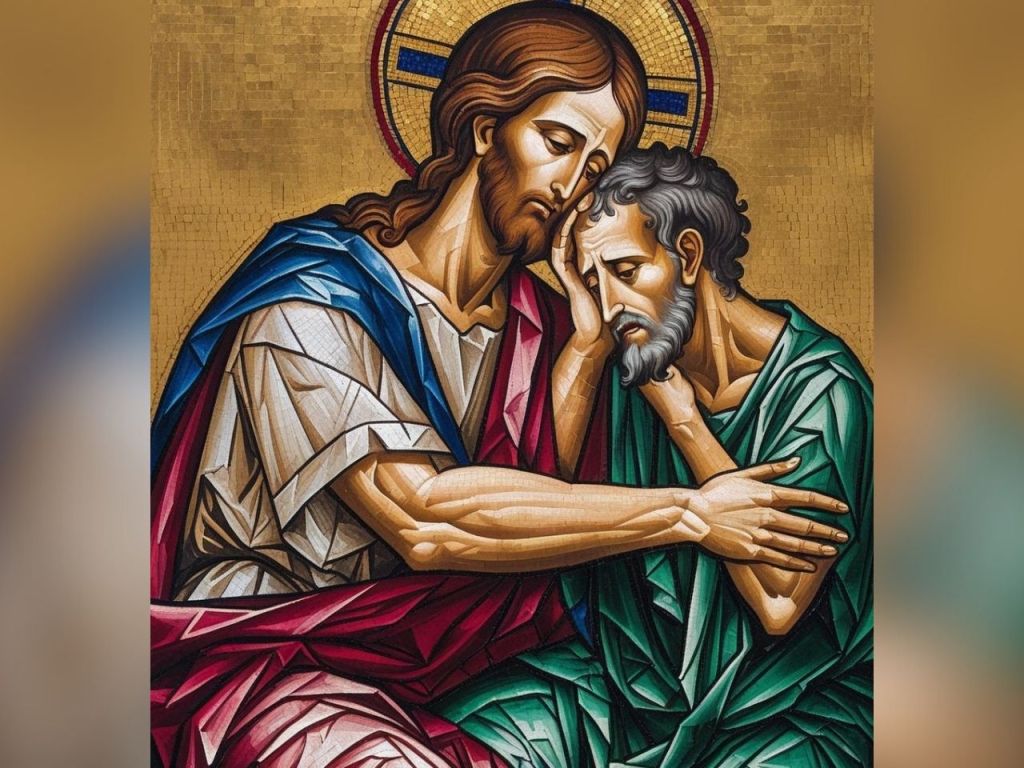
“But while he was yet at a distance, his father saw him… and ran and embraced him and kissed him.” (Luke 15:20)
The father in the Parable of the Prodigal Son was looking for his lost child the entire time the young man was away. He wasn’t sitting inside, nursing a grievance or waiting for an apology to slide under the door. This is the posture of our God—always watching, always waiting, and always desiring our return.
Notice that the father did not wait for the son to close the gap. He could have stood his ground to make a point. Instead, the moment he saw him, he made no effort to conceal his overwhelming love and joy. He bridged the distance himself, refusing to let his son walk that last mile home by himself.
Whatever distance we feel between us and God in our hearts, we can rest in the knowledge that He is not waiting for us to be perfect before He embraces us. He is not holding back to teach us a lesson. The moment we make the slightest turn toward Him, He is already running toward us, ready to greet us not with a lecture, but with a kiss. We are loved, we are missed, and we are welcome home.
The Holy Apostle Paul established churches, performed miracles, and suffered immensely for the Gospel. Yet, his honest assessment of himself in 1 Timothy 1:15 is that he is “the chief among sinners”. How can a saint feel like a sinner?
Think of a dark room. In the shadows, the room might look perfectly clean. But if you open the blinds and let the bright noon sun stream in, suddenly you see every speck of dust dancing in the air and every smudge on the window. The dust was always there; the light just made it visible.
It’s the same with our spiritual life. The closer we draw to the Light of Christ, the more clearly we see the true condition of our souls. This isn’t a cause for despair; it is a sign of spiritual health. It means we are finally seeing reality.
We need to always remember the first part of the verse: Christ Jesus came into the world to save sinners. If we recognize ourselves as the chief of sinners today, we can take heart. We are exactly who He came to heal and save.
When reading the Bible, it’s inevitable that, from time to time, we will encounter passages that challenge our perspectives or make us feel uneasy. However, we shouldn’t dismiss a message or assume it lacks truth simply because it doesn’t align with our current sensibilities. Spiritual growth, like any profound healing process, can be inherently difficult.
Finding spiritual healing and growth often requires us to step into the unknown and confront the parts of ourselves we might prefer to ignore. Just as physical therapy involves stretching tight muscles, our engagement with the scriptures serves as a vital part of God’s therapeutic plan for our souls.
Without a willingness to confront the difficult truths presented to us, we cannot truly heal. The scriptures act as a mirror and a guide, pushing us toward a version of ourselves that is more spiritually sober and resilient—more Christ-like. By embracing the tension we feel during these moments of “scriptural therapy,” we open the door to genuine renewal.
The Old Testament is a living gateway to God’s love. Its books speak to the heart of God’s people, telling the story of creation and the fall, promise and covenant, exile and return—all leading to the saving work of Christ.
The burning bush, the Passover lamb, the Exodus, and the voices of the prophets all lead us to the Crucified and Risen Lord, who “opened the Scriptures” for His disciples and set their hearts ablaze with the fire of the Holy Spirit (Luke 24:27).
Abraham’s trust, Moses’ obedience, David’s repentance, the prophets’ courage, and Israel’s hope anchor us in faithfulness. These stories are signposts pointing to Christ and to the healing of our souls.
So when we pick up the Old Testament, our prayer becomes the cry of the Psalms: “Thy face, Lord, will I seek. Reveal Thy face, that we may be saved” (Psalms 26:8; 79:4).
The opening of Genesis and John shows that the world is made by God’s Word. Genesis 1 depicts God speaking the universe into existence: God does not build or struggle with raw materials; he simply speaks, and the Cosmos comes into being. Creation itself is a kind of liturgy, ordered and sustained by the living Word of God.
This shapes how we understand both the world and Jesus Christ. When Scripture says that God creates by speaking, it teaches that his Word is not just information but life‑giving power. God’s speech is supremely effective; it accomplishes what it declares. Every creature exists because it has been personally addressed by God.
The Gospel of John then makes this personal Word explicit: “In the beginning was the Word, and the Word was with God, and the Word was God.” Before anything was made, the Word already is, in perfect communion with the Father and truly God. “All things were made through him” means that the same divine Word who speaks in Genesis is the eternal Son, the one through whom all things came to be.
Creation is therefore Trinitarian: the Father creates through the Son in the Holy Spirit. The order and beauty of the world reflect the wisdom of the Word, the signature of Christ on everything that exists. The One who will later walk the roads of Galilee is the same One through whom galaxies, oceans, and atoms were brought into being.
The Holy Evangelist John then makes a staggering claim: “The Word became flesh and dwelt among us.” The eternal Word who called light out of darkness enters the very world he made, taking on our nature without ceasing to be who he is eternally. The hands that shaped the stars become the hands of a carpenter and are later stretched out on the Cross. The voice that said “Let there be light” will cry, “It is finished,” bringing about a new creation.
To say that Jesus Christ is the Word of God is to say that the Savior of the world is also its Maker. In him, the first creation and the new creation meet. He still speaks, calling each of us out of darkness into his light, and when he speaks, things change: the Word who once created now re‑creates, restoring in us the image first spoken into being at the dawn of this age.
The account of the Gadarene demoniac begins with Jesus intentionally traveling into Gentile territory — a region where no one expected a Jewish teacher to go — to seek rest. Instead of respite, He encounters a man who is possessed by many demons and has been completely cast out by his own community, living among the tombs and bound by chains.
Despite the man’s terrifying condition and social isolation, Christ is not afraid or offended; He approaches the demoniac with profound compassion. The Church Fathers see this moment as symbolic of Christ’s entire messianic mission. No one, no matter how lost or broken, has drifted so far as to be outside the reach of God’s love and saving power.
The healing of the Gadarene demoniac assures us that Christ’s grace extends to the lonely, the forsaken, and those on the very edges of community. Jesus invites all to experience dignity and new life in Him, drawing us from the fringes into his loving embrace, where we stand together as brothers and sisters in a communion of Divine love.
Immediately before Holy Communion, the deacon comes out of the altar with the holy Chalice, exclaiming: “With the fear of God… draw near.” When we say, “the fear of God,” what are we actually talking about?
While the world’s fear makes us hide and leads us into isolation—like Adam and Eve in the garden—the fear that God calls us to cultivate is life-giving. When we humbly become aware of our weaknesses, let that awareness inspire hope—not despair. Like the sick and demon-possessed in the days of our Lord’s earthly ministry, we run with confidence into Christ’s embrace, certain that healing and forgiveness await all who seek Him.
The true “fear of God” is not about anxiety or trembling before an indifferent despot, but about cherishing the precious relationship we have with our loving Creator. Let us remember the wisdom of the saints: those who have tasted the peace and sweetness of God’s presence fear only one thing—losing that intimacy with Him. This holy fear is not about dreading punishment, but about never wanting to be separated from God’s love.
“And in the synagogue there was a man who had the spirit of an unclean demon, and it shouted with a loud voice, saying, ‘Leave us alone. What have we to do with you, Jesus of Nazareth? Have you come to destroy us? I know who you are, the Holy One of God.’ But Jesus rebuked it, saying, ‘Be quiet and come out of him.’ Then the demon threw him down in their midst and went out of him, having done him no harm.” (Luke 4:33-35)
In the above passage, note that the demon identifies Jesus as the “Holy One of God.” In Psalm 16, it says, “you will not abandon me to Hades and nor let your Holy One see corruption.” “Holy One” is a term for the Messiah.
The demons say, “we know who you are.” But Jesus says, “be quiet.” He stops the demon from confessing him as the Holy One of God. He doesn’t allow him to say this.
St. Cyril of Alexandria says, “He would not permit the unclean demons to confess him. It was not right for them to usurp the glory of the apostolic office or to talk of the mystery of Christ with polluted tongues.”
Knowing who Jesus is is not enough. St. Augustine says, “the devils confessed Christ, but lacking charity, lacking selfless love, it availed nothing. Do not boast of that faith that puts you at the same level with the devils.”
Again in Luke 4:41 we read, “And also demons were coming out of many people shouting and saying, ‘You are the Christ, the Son of God.’ But he rebuked them and would not allow them to talk because they knew he was the Christ.”
St. Athanasius the Great says, “Even when the demons spoke the truth, when they said, ‘You are the Son of God,’ the Lord himself silenced them and forbade them to speak. He did this to keep them from sowing their own wickedness in the midst of the truth. He also wished us to get used to never listening to them, even though they seem to speak the truth.”
There are a couple of very important things to note in this insight from St. Athanasius.
First of all, temptations are very rarely enticements inciting us to do something that is outright evil. Most often they are a distortion of the truth. Jesus does not want the demons to confess him as the Christ, the Son of God, because he knows that they will take that truth and they will distort it in such a way that will confuse the people and take them away from him.
We can see this all the way back to Genesis 3 with the first temptation. The devil says to Eve, “If you eat the fruit of the tree of the knowledge of good and evil, you will become like God. And God does not want that.” This is a twisting of the truth because God does want us to become like him, but we can only become like him with him by participating in the life that he calls us to. We can’t do it on our own. So he doesn’t even allow the demons to declare the truth because he knows they’re just going to twist the truth up.
The second thing St. Athanasius says is Christ wants the people to get used to never listening to the demons. In our lives, we give agency to what we pay attention to. The things that we pay attention to, we give power to in our lives. So by listening to the demons, even when they are speaking the truth, we’re allowing them access into our hearts and minds, and eventually this will turn on us.
Even though these demons are saying the absolute truth, Jesus is the Christ, is the Son of God, he says, “no, you are not allowed to say that.”
Jesus’ refusal to accept testimony from demons, even when they spoke truth, reveals that the source of the message matters as much as the message itself. In our own spiritual lives, we must learn to discern between authentic revelation that draws us closer to God and deceptive truths that, while factually correct, lead us away from genuine relationship with Christ. The demons knew who Jesus was, but their knowledge was sterile, lacking the love and surrender that transforms mere intellectual assent into saving faith. As we navigate a world full of competing voices claiming spiritual authority, may we cultivate the wisdom to recognize that true knowledge of God only comes from humble hearts that seek Him in truth and love.
I’m delighted to share with you my first collaboration with my good friends at the Patristix YouTube Channel. God willing, it’s the first of many.
This is a session of the Fellowship of St. Theophan the Recluse (FOSTR), a world-wide online community of Eastern Orthodox seekers and inquirers. I’d only recorded audio at this session, and I’m very grateful to Brothers Robinson at Patristix for the wonderful artwork and video.
 Eastern Orthodoxy