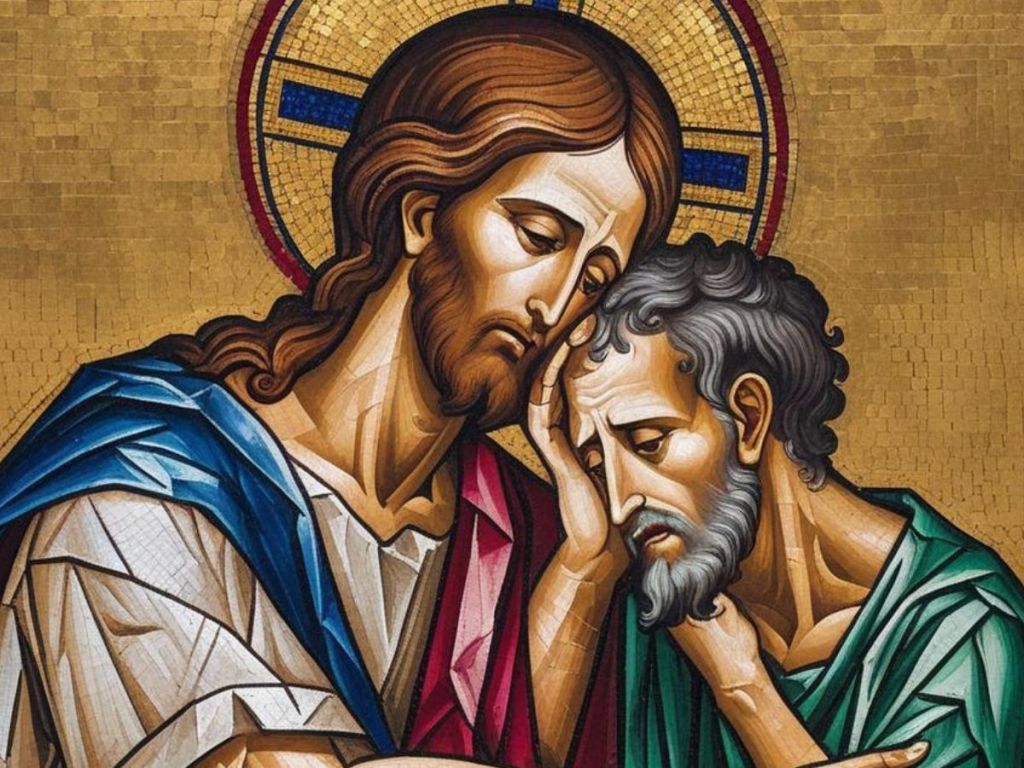
In the Eastern Orthodox Church, the fear of God is not about terror or punishment but a deep reverence born from love.
In the Eastern Orthodox Church, the fear of God is not about terror or punishment but a deep reverence born from love.
I’m delighted to share with you my first collaboration with my good friends at the Patristix YouTube Channel. God willing, it’s the first of many.
This is a session of the Fellowship of St. Theophan the Recluse (FOSTR), a world-wide online community of Eastern Orthodox seekers and inquirers. I’d only recorded audio at this session, and I’m very grateful to Brothers Robinson at Patristix for the wonderful artwork and video.
Find out more about FOSTR here → https://fostrorthodoxy.podia.com
And visit the Patristix YouTube channel! → https://www.youtube.com/@Patristix
__
Support my online ministry ➔ https://www.buymeacoffee.com/frajarmus ☕️
Many thanks! Prayers & Blessings.
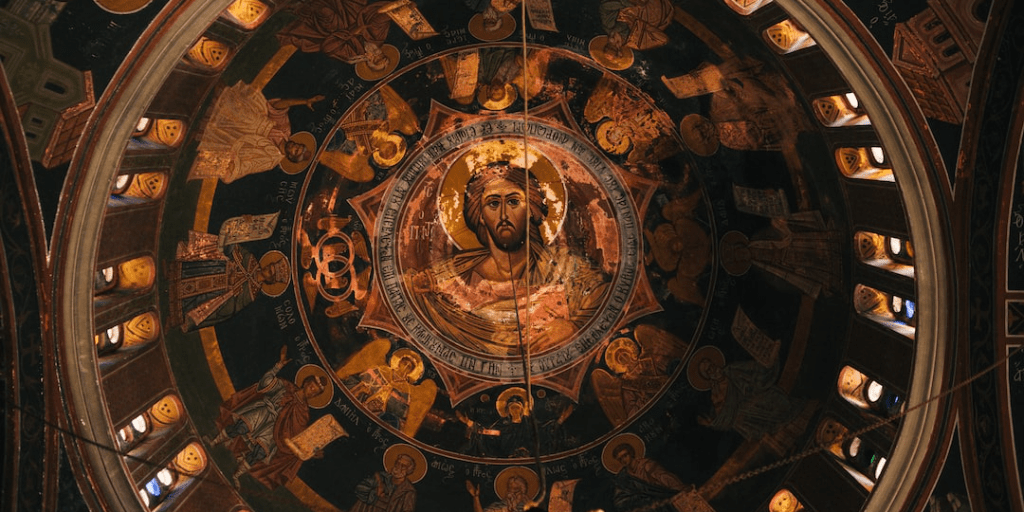
I was recently asked to provide offer a quick overview of the beliefs and practices that make Eastern Orthodox Christianity different from the Western Christian confessions. This is no easy task; to get it done you need to paint with a pretty wide brush. With that said (and for what it’s worth) here’s my response…
To start off, it needs to be stressed that these are generalizations only. There are many different Western Christian confessions and Orthodoxy overlaps here and there with a lot of them. But the differences are significant and some of the big ones are as follows.
First, we understand salvation as being healed from a life-threatening wound, not getting a reprieve from a death sentence. The Church is a hospital, not a courtroom.
Second, becoming a Christian is not about making an intellectual agreement to a specific set of principles; it is about entering into a living relationship with Jesus Christ, through his Body on earth – the Church.
Third, there is more to reality than what we can see. The unseen world is real, it has an impact on us and we can impact it. And we connect with the unseen world through symbols, icons, and liturgy (ritual).
Finally (and I’ve saved the big one for last), we believe that heaven and hell are the same place. Actually, they are not places at all but reactions to, or experiences of, God’s Presence. At the end of this age everyone will be in the presence of God, some will like it and others won’t – that’s heaven and hell.
Again, these are only generalizations, but if they’ve piqued your curiosity at all, feel free to reach out and I’ll be happy to delve into them a little deeper with you.
In his teaching on prayer in Matthew 6, is Jesus really condemning repetition in prayer? If so, why do we see multiple examples of repetitive prayer in the scriptures? Visions of heaven, in fact, show that around God’s heavenly throne all you hear is repetitive prayer: “Holy! Holy! Holy!”
In the Eastern Orthodox Church, the use of incense in worship and personal prayer holds profound symbolism. There are two significant meanings attached to the fragrant smoke that fills our sacred spaces.
First, incense symbolizes is our prayers rising to heaven, as we read in Revelation 8: “And another angel came and stood at the altar with a golden censer, and he was given much incense to offer with the prayers of all the saints on the golden altar before the throne…” We also find this petition in Psalm 141: “Let my prayer be counted as incense before you, and the lifting up of my hands as the evening sacrifice!”
The other symbolic meaning of incense has to do with the Temple in Jerusalem. On the Day of Atonement, when the High Priest entered the Holy of Holies, he would carry a bowl filled with much incense. The smoke served as a filter to protect him from the Divine Glory sitting on the mercy seat. In II Chronicles 5 we read that the priests couldn’t serve in the Temple when the Lord’s Glory descended upon it. And in Isaiah 6, when the prophet is given a vision of the heavenly Temple, he says “the house was filled with smoke.” Incense, then, also indicates our entrance into the Presence of God when we gather for worship.
Q: I want to draw closer to Eastern Orthodoxy but my spouse wants no part of it. What do I do?
A: These situations are more common than you might think. In fact, they are more the rule than the exception. Because this is an issue that touches directly on someone’s core values, you cannot push your spouse into a decision. Take your time and do your best to be a good witness to the Orthodox Faith, answering questions with kindness and accepting their resistance with patience. It’s a longer road, but one with much more fruitful possibilities for your family’s faith journey. And, of course, pray without ceasing that the Lord warms your spouse’s heart to the beauty and truth of Eastern Orthodoxy.
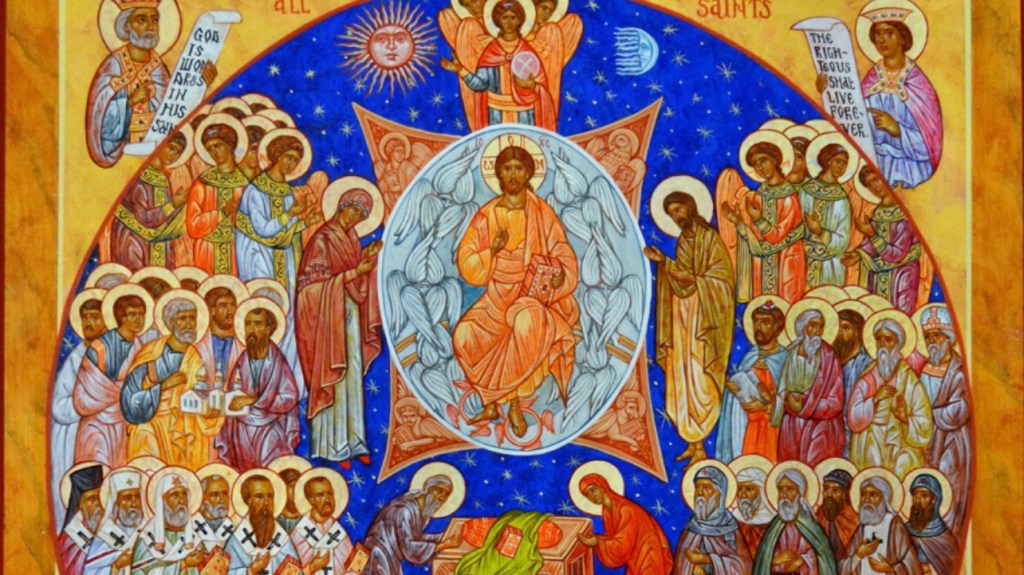
A question that I hear quite frequently concerns the intercession of the saints. Why do the Orthodox believe in this? Can you find references to it in the scriptures? I want to keep these posts short, so let me share with you a link to an episode of my podcast where I talk about this in a bit more detail.
First let me say this. The popular understanding of heaven and earth is that the dead are “up there” while we are “down here” and that there is largely no practical connection between the “up there” and the “down here.” Classical Christianity (ie, Eastern Orthodoxy), does not see the world in this way. The spiritual realm is a lot closer to us than we think, but our ability to perceive it is impaired.
So with that said, here’s the link.
https://anchor.fm/frajarmus/episodes/The-intercession-of-the-saints-e204h4m
 Eastern Orthodoxy