I was recently asked to provide offer a quick overview of the beliefs and practices that make Eastern Orthodox Christianity different from the Western Christian confessions. This is no easy task; to get it done you need to paint with a pretty wide brush. With that said (and for what it’s worth) here’s my response…
To start off, it needs to be stressed that these are generalizations only. There are many different Western Christian confessions and Orthodoxy overlaps here and there with a lot of them. But the differences are significant and some of the big ones are as follows.
First, we understand salvation as being healed from a life-threatening wound, not getting a reprieve from a death sentence. The Church is a hospital, not a courtroom.
Second, becoming a Christian is not about making an intellectual agreement to a specific set of principles; it is about entering into a living relationship with Jesus Christ, through his Body on earth – the Church.
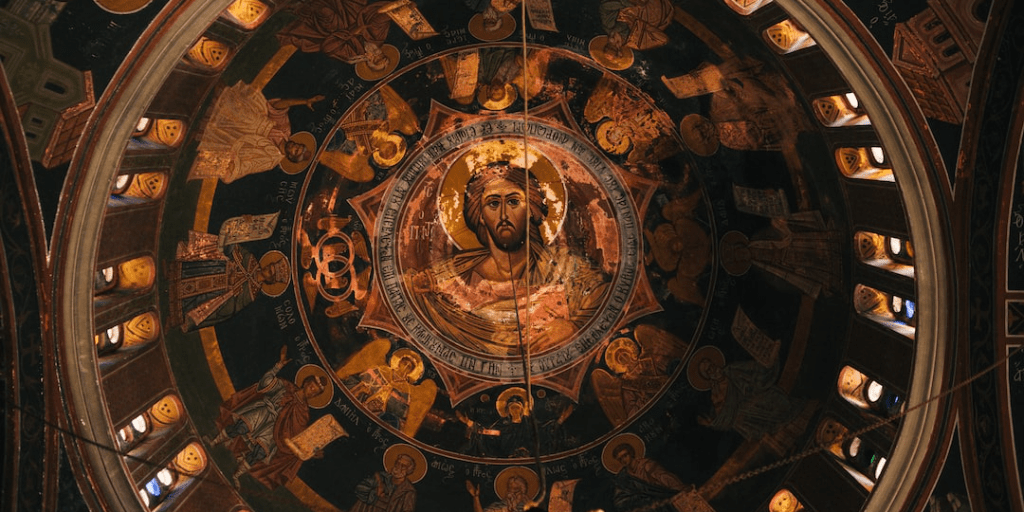
Third, there is more to reality than what we can see. The unseen world is real, it has an impact on us and we can impact it. And we connect with the unseen world through symbols, icons, and liturgy (ritual).
Finally (and I’ve saved the big one for last), we believe that heaven and hell are the same place. Actually, they are not places at all but reactions to, or experiences of, God’s Presence. At the end of this age everyone will be in the presence of God, some will like it and others won’t – that’s heaven and hell.
Again, these are only generalizations, but if they’ve piqued your curiosity at all, feel free to reach out and I’ll be happy to delve into them a little deeper with you.
 Eastern Orthodoxy