Standing Fast in Christ

In his first epistle to the Corinthians, the Holy Apostle Paul offers the faithful these words of wisdom: “Watch, stand fast in the faith, be brave, be strong. Let all that you do be done with love.” (1 Cor. 16:13-14) From the very beginning, Christians have needed this encouragement.

There are always temptations either to compromise the faith or to give it up entirely. Yet standing fast in Christ does not mean being harsh or argumentative. Paul reminds us: everything must be done in love. Too often (especially online!), defending the faith looks like winning arguments or scoring “gotchas.” But in truth, no one has ever been argued into the Kingdom by clever comebacks.

Our calling is the same as that of the believers in Corinth who first heard St. Paul’s words: to witness through compassion, patience, and kindness—even when others take aim at us. Christ did not conquer by force or arrogance, but by emptying Himself in love on the Cross.

To stand fast in the faith means keeping our integrity, being brave to love when it’s hardest, and being strong enough not to sink into bitterness. The Kingdom is built on peace, kindness, and love, and as St. Paul urges, “Let all that you do be done in love.”

“Do Justice, Love Kindness, Walk Humbly”

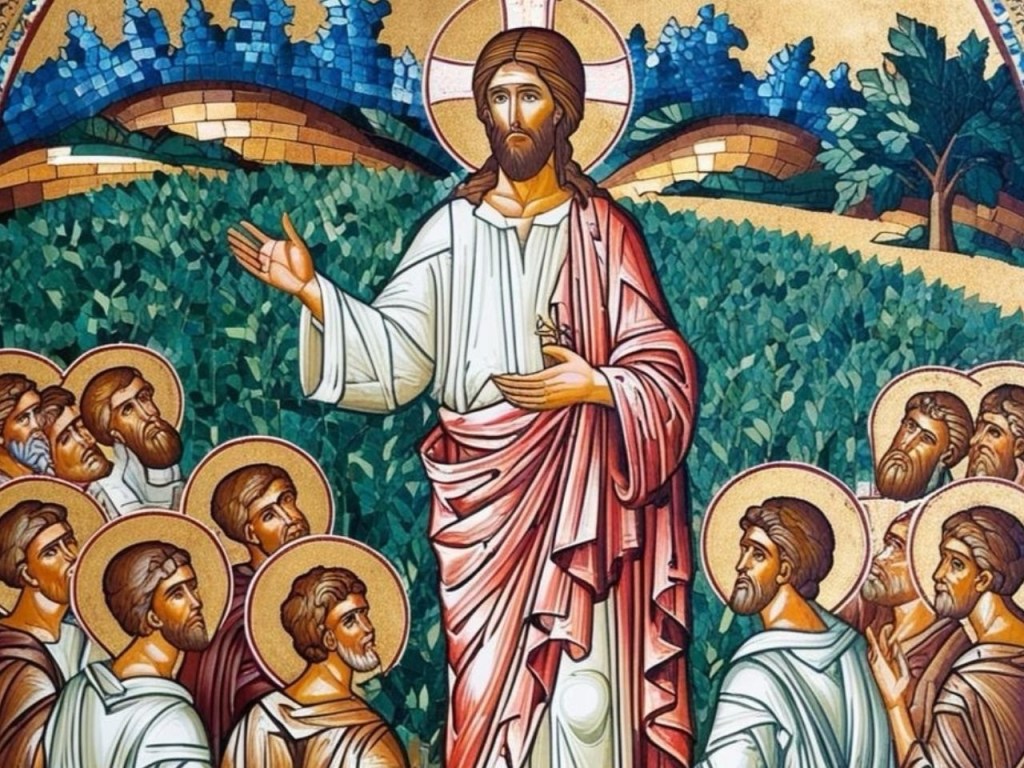
People were deeply moved by St. John the Forerunner’s warning of the coming judgment and wanted to know how to amend their lives. St. John’s answer was grounded in mercy and justice—the same command proclaimed by the prophet Micah, that we “do justice, love kindness, and walk humbly with God.”

John was not giving a detailed code of behavior for every circumstance, but rather revealing the heart of the law. Repentance meant a shift away from “each man for himself” to becoming one’s brother’s keeper. True turning to God always includes turning toward the neighbor, because love of God and love of neighbor cannot be separated.

In practical terms, this means that part of faithfulness to God is found in serving others. Just as our sins often make life harder for those around us, repentance produces the opposite effect: making another’s life a little lighter, even through small acts of mercy. These are the fruits worthy of repentance, the visible sign that one’s heart has truly turned toward God.

“I Believe”

Looking over the text of the Divine Liturgy, we find very few “I” statements. The Liturgy is a communal act and the content of the prayers and hymns reflect this. There are, however, two notable exceptions. One is in the Creed and the other is the prayer that we read immediately before Holy Communion. Both of these sacred texts begin with the words “I believe.”
By saying “I believe,” we are making a personal confession of faith, aligning ourselves with the collective belief of the Church, first proclaimed by the holy apostles. “I believe” is not an abstract statement—this is the language of conviction, trust, and relationship.
We don’t say “I think” or “I theorize,” but “I believe.” In the New Testament, belief is never just intellectual agreement. It is an act of entrusting ourselves to God. St. Paul says clearly, “If you confess with your mouth that Jesus is Lord and believe in your heart that God raised Him from the dead, you will be saved” (Romans 10:9). To believe with the heart is to place our whole life in God’s hands. We hear this invitation over and over again in the Divine Liturgy: “…let us commend ourselves and each other and all our life to Christ our God.”
The Lord Himself connects belief with life. In John 11:25–26, standing at the tomb of Lazarus, Jesus says, “I am the resurrection and the life. Whoever believes in Me, though he die, yet shall he live, and everyone who lives and believes in Me shall never die. Do you believe this?” The question He asks Martha is the same He asks each of us when we begin the Creed and then again as we approach the Holy Eucharist: Do you believe this?

A Cross of Tragedy and Victory

Metropolitan Anthony Bloom said that the Cross is both a tragedy and a victory, revealing what is perhpas the greatest and most beautiful paradox in the Gospel. The tragedy lies in Christ’s innocent suffering and the shameful nature of crucifixion—a punishment for criminals and political outcasts—yet Christ willingly endures it out of  selfless love.

Our Lord did not will to be lifted up on the Cross for his own sake. He did it for us. Because Christ’s death was freely offered, the Cross becomes the act of sacrificial love that transforms death from tragedy to glory. “The Cross,” he said, “an instrument of infamous death… because Christ’s death was that of an innocent, and because this death was a gift of self in an act of love—becomes victory.”

Christians are called to embrace this paradox: taking up the Cross means denying selfishness and opening ourselves to divine love, which is, in Metropoltian Anthony’s words, “love sacrificial, love crucified, but love exulting in the joy of life.” This transformation demonstrates how defeat leads to glory through self-emptying love and ultimate hope.

Exploring the Messianic Fulfillment in Luke 4:17-19


Here’s an excerpt from my online Bible Study. In this discussion of Luke 4, we delve into the second half of Luke 4:17-19, where Jesus reads from Isaiah’s prophecy and declares His Messianic mission. The passage states that the Spirit of the Lord is upon Jesus, anointing Him to preach the Gospel, heal the broken-hearted, deliver the captives, and give sight to the blind. In this discussion, we link Jesus’ mission to the concept of the Jubilee Year, a time of liberty and restoration in Israel, symbolizing the Messianic reign.

The Ministry of Jesus in Galilee: Insights from Luke 4:14-15


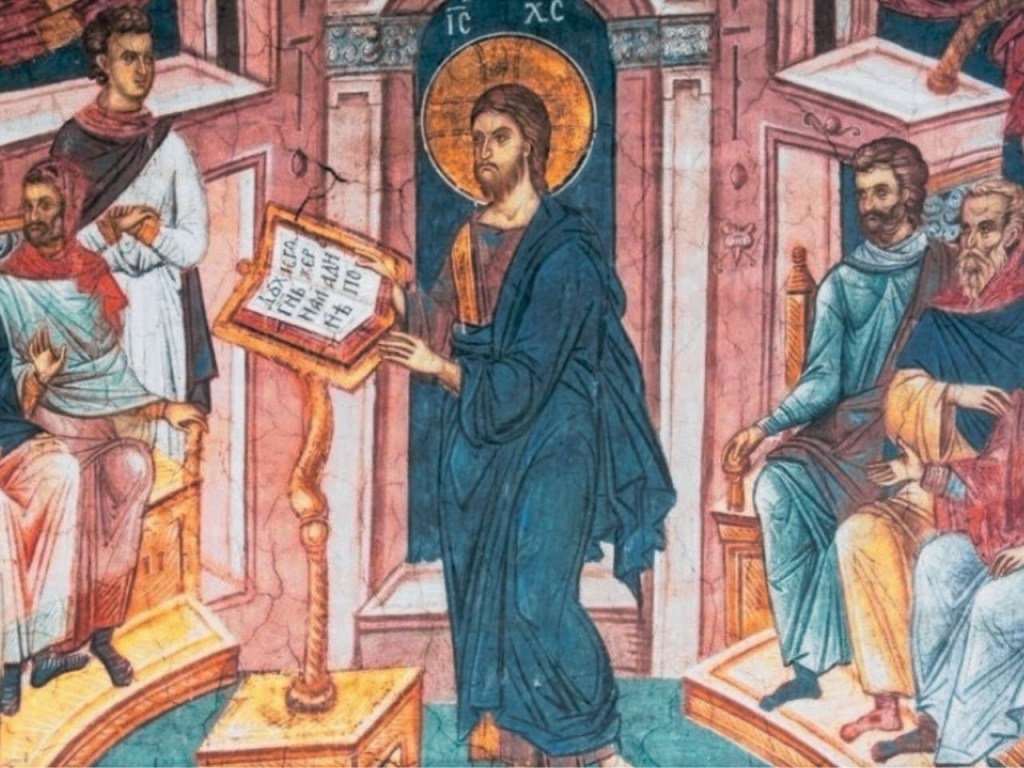
In this excerpt from my online Bible Study, we explore Luke 4:14-15, where Jesus returns to Galilee empowered by the Spirit and begins teaching in synagogues, earning widespread praise. Saint Ephraim the Syrian and Origen emphasize Jesus’ spiritual power and the significance of teaching within the synagogue. The discussion highlights the centrality of the worshiping community in experiencing and learning the faith. The episode concludes with a reflection on facing temptations with God’s strength and becoming ambassadors of His grace.

The People that We Meet


When we give our lives over to Christ, one of the first places He begins working is in the people we meet. It’s easy to say, “Thank you, God, for bringing this person into my life,” when someone is helpful, supportive, and inspiring.
But what about those people who test our patience, who annoy us, or who we’d rather avoid? Can we still say, “Thank you, God, for bringing this person into my life”?
Every person Christ sends our way is there for a reason—either so we can serve Christ through them, or so we can learn something about ourselves that’s needed for our spiritual healing and growth. “As iron sharpens iron, so one person sharpens another.” (Proverbs 27:17)
Whether a person brings us joy or frustration, every encounter is a chance to break free from our egos and selfishness, and to truly live for others. The only thing we need to ask God is for the wisdom to discern why He brought us together.
Even those who annoy or persecute us are there to teach us compassion, kindness, and forgiveness. They help us learn to deal with negative emotions without letting bitterness take root. And sometimes, we’re the ones God has sent into someone else’s life to help them grow in patience and love.