Immediately before Holy Communion, the deacon comes out of the altar with the holy Chalice, exclaiming: “With the fear of God… draw near.” When we say, “the fear of God,” what are we actually talking about?
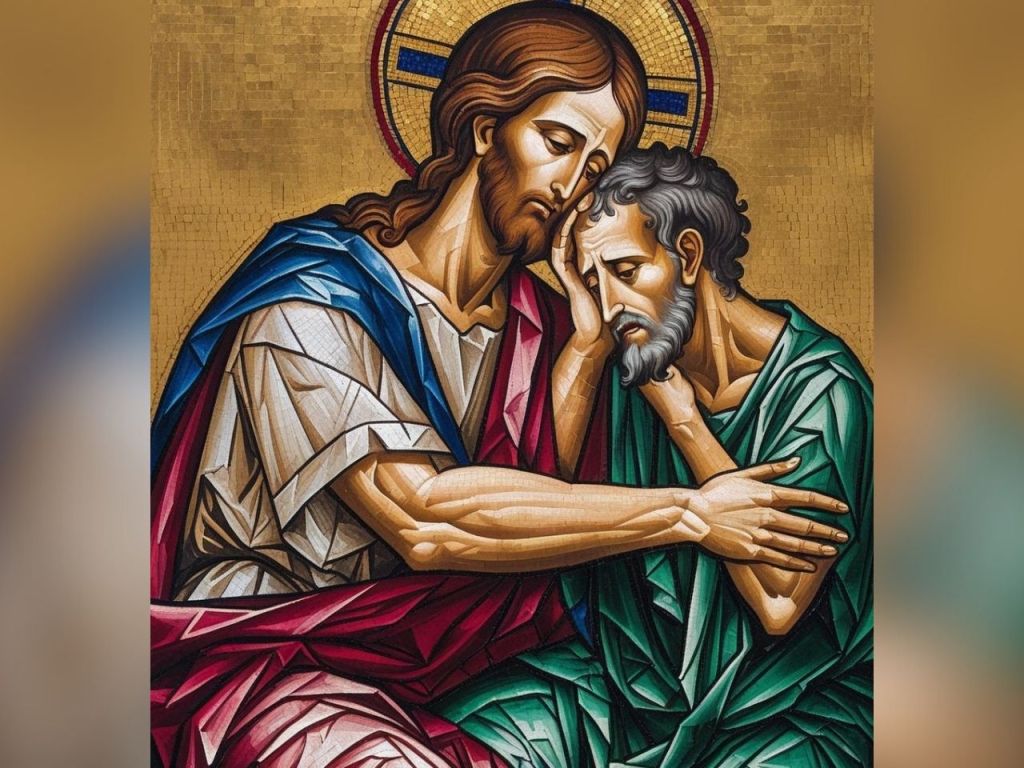
While the world’s fear makes us hide and leads us into isolation—like Adam and Eve in the garden—the fear that God calls us to cultivate is life-giving. When we humbly become aware of our weaknesses, let that awareness inspire hope—not despair. Like the sick and demon-possessed in the days of our Lord’s earthly ministry, we run with confidence into Christ’s embrace, certain that healing and forgiveness await all who seek Him.
The true “fear of God” is not about anxiety or trembling before an indifferent despot, but about cherishing the precious relationship we have with our loving Creator. Let us remember the wisdom of the saints: those who have tasted the peace and sweetness of God’s presence fear only one thing—losing that intimacy with Him. This holy fear is not about dreading punishment, but about never wanting to be separated from God’s love.
People were deeply moved by St. John the Forerunner’s warning of the coming judgment and wanted to know how to amend their lives. St. John’s answer was grounded in mercy and justice—the same command proclaimed by the prophet Micah, that we “do justice, love kindness, and walk humbly with God.”
John was not giving a detailed code of behavior for every circumstance, but rather revealing the heart of the law. Repentance meant a shift away from “each man for himself” to becoming one’s brother’s keeper. True turning to God always includes turning toward the neighbor, because love of God and love of neighbor cannot be separated.
In practical terms, this means that part of faithfulness to God is found in serving others. Just as our sins often make life harder for those around us, repentance produces the opposite effect: making another’s life a little lighter, even through small acts of mercy. These are the fruits worthy of repentance, the visible sign that one’s heart has truly turned toward God.
“And in the synagogue there was a man who had the spirit of an unclean demon, and it shouted with a loud voice, saying, ‘Leave us alone. What have we to do with you, Jesus of Nazareth? Have you come to destroy us? I know who you are, the Holy One of God.’ But Jesus rebuked it, saying, ‘Be quiet and come out of him.’ Then the demon threw him down in their midst and went out of him, having done him no harm.” (Luke 4:33-35)
In the above passage, note that the demon identifies Jesus as the “Holy One of God.” In Psalm 16, it says, “you will not abandon me to Hades and nor let your Holy One see corruption.” “Holy One” is a term for the Messiah.
The demons say, “we know who you are.” But Jesus says, “be quiet.” He stops the demon from confessing him as the Holy One of God. He doesn’t allow him to say this.
St. Cyril of Alexandria says, “He would not permit the unclean demons to confess him. It was not right for them to usurp the glory of the apostolic office or to talk of the mystery of Christ with polluted tongues.”
Knowing who Jesus is is not enough. St. Augustine says, “the devils confessed Christ, but lacking charity, lacking selfless love, it availed nothing. Do not boast of that faith that puts you at the same level with the devils.”
Again in Luke 4:41 we read, “And also demons were coming out of many people shouting and saying, ‘You are the Christ, the Son of God.’ But he rebuked them and would not allow them to talk because they knew he was the Christ.”
St. Athanasius the Great says, “Even when the demons spoke the truth, when they said, ‘You are the Son of God,’ the Lord himself silenced them and forbade them to speak. He did this to keep them from sowing their own wickedness in the midst of the truth. He also wished us to get used to never listening to them, even though they seem to speak the truth.”
There are a couple of very important things to note in this insight from St. Athanasius.
First of all, temptations are very rarely enticements inciting us to do something that is outright evil. Most often they are a distortion of the truth. Jesus does not want the demons to confess him as the Christ, the Son of God, because he knows that they will take that truth and they will distort it in such a way that will confuse the people and take them away from him.
We can see this all the way back to Genesis 3 with the first temptation. The devil says to Eve, “If you eat the fruit of the tree of the knowledge of good and evil, you will become like God. And God does not want that.” This is a twisting of the truth because God does want us to become like him, but we can only become like him with him by participating in the life that he calls us to. We can’t do it on our own. So he doesn’t even allow the demons to declare the truth because he knows they’re just going to twist the truth up.
The second thing St. Athanasius says is Christ wants the people to get used to never listening to the demons. In our lives, we give agency to what we pay attention to. The things that we pay attention to, we give power to in our lives. So by listening to the demons, even when they are speaking the truth, we’re allowing them access into our hearts and minds, and eventually this will turn on us.
Even though these demons are saying the absolute truth, Jesus is the Christ, is the Son of God, he says, “no, you are not allowed to say that.”
Jesus’ refusal to accept testimony from demons, even when they spoke truth, reveals that the source of the message matters as much as the message itself. In our own spiritual lives, we must learn to discern between authentic revelation that draws us closer to God and deceptive truths that, while factually correct, lead us away from genuine relationship with Christ. The demons knew who Jesus was, but their knowledge was sterile, lacking the love and surrender that transforms mere intellectual assent into saving faith. As we navigate a world full of competing voices claiming spiritual authority, may we cultivate the wisdom to recognize that true knowledge of God only comes from humble hearts that seek Him in truth and love.
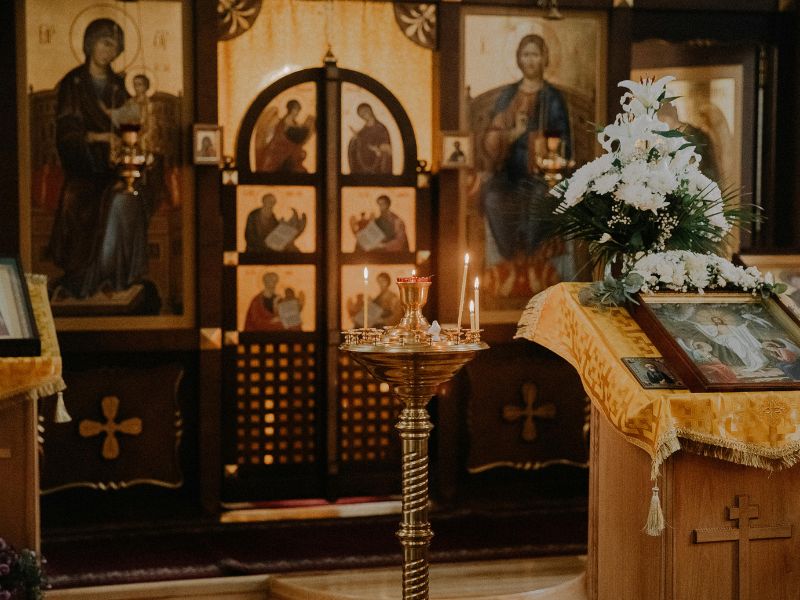
For first-time visitors to an Orthodox Church, one of the most striking aspects of the worship experience is the absence of musical instruments. This isn’t merely a stylistic choice; it’s a deliberate theological expression rooted in the history and beliefs of Eastern Orthodoxy.
The roots of Eastern Orthodoxy trace back to the earliest Christian communities, offering worship practices that have remained consistent for nearly two millennia. Historically, early Christians were influenced by Jewish synagogue practices, which had already moved away from instrumental accompaniment by the first century AD. The Early Christians associated instruments with pagan rituals and secular entertainment, leading them to favor a cappella singing as a way to distance themselves from these practices.
In Eastern Orthodoxy, the human voice is considered the perfect instrument. Created as we are in God’s image, our voices are seen as the purest form of musical expression. When Orthodox Christians sing, they are not merely performing music; they are offering their very breath as prayer. The voice, emerging from within the body, symbolizes prayer rising from the heart.
The term “Orthodox” itself is significant, with “doxa” meaning glory in Greek. This word carries two meanings: to praise and to make clearly known. The human voice is believed to be the most perfect way to offer God glory, as it allows for both praise in words and music and the proclamation of Christ’s Gospel through hymns and chanted prayers.
Orthodox worship aims to create an “icon of sound,” a window into heaven, not only through what is seen but also through what is heard. The unadorned human voice captures the essence of angelic worship. In a world increasingly dominated by electronic and produced sound, there is something refreshingly authentic about spaces where human voices alone fill the air.
Through psalms, hymns, and spiritual songs, Orthodox Christians offer praise to God and make His truth — that truth that sets us free — known to all who experience the timeless, angelic beauty of the Orthodox Christian liturgy.
 Eastern Orthodoxy