In the creed, we defined the churches Catholic. This comes from the Greek word “katholike,” meaning “concerning the whole.” The church preaches the whole Gospel, to the whole of humanity, throughout the whole span of history.
Preaching the Gospel “as a whole” means that we need to look at the entire scriptures as a single unit. We do not focus on one book, one chapter, one verse. Everything is looked at within the context of the broader message. We interpret everything with a “concern for the whole” story.
Consider, for example, what Saint Paul says to the Christians of Corinth: “For though you have countless guides in Christ, you do not have many fathers. For I became your father in Christ Jesus through the gospel.” (I Corinthians 4:14)
Paul clearly identifies himself as the father of the Christians of Corinth. But what about what Christ says in the Gospel of Matthew: “Call no man father?” How do we reconcile Jesus’ teaching in Matthew with the apostle identifying himself as “Father Paul” to the Christians of Corinth?
St Paul does this because he understands that there’s a specific context for the teaching, “Call no man father.” There are times when it is completely appropriate to call our spiritual leaders, “Father.” This is a term that has been used for clergy — beginning with bishops, and later priests — for centuries in the Christian Church.
When we look at the teaching, “Call, no man father,” or any teaching of Christ in the Gospels, we need to interpret it through the wider context of Church life, including the wider context of scriptures. “Call no man father” in Matthew is correctly understood within this broader framework. (Like Paul identifying himself as the Father of the Corinthian Christians, or the multiple times our spiritual forebears are called “father” and “fathers” in the Book of Acts.)
St. Ignatius Brianchaninov said:
“When on a clear fall night I gaze upon the clear heavens, illumined by innumerable stars that send out a single light, then I say to myself: thus are the writings of the holy fathers. When on a summer’s day I gaze upon the wide sea, covered with a multitude of distinct waves, driven by a single wind to a single end, a single pier, then I say to myself: such are the writings of the fathers. When I hear a well-ordered choir, in which different voices sing a single hymn in shimmering harmony, then I say to myself: such are the writings of the fathers.”
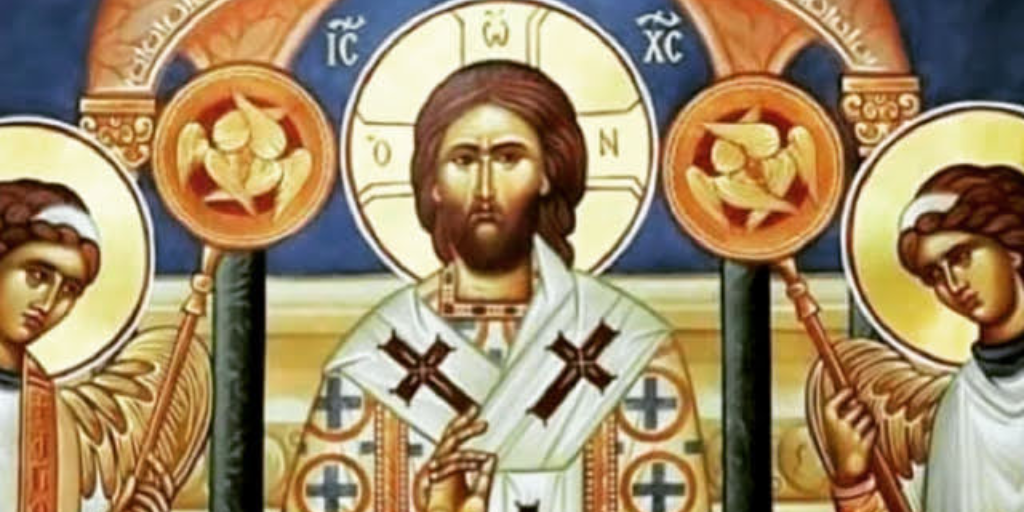
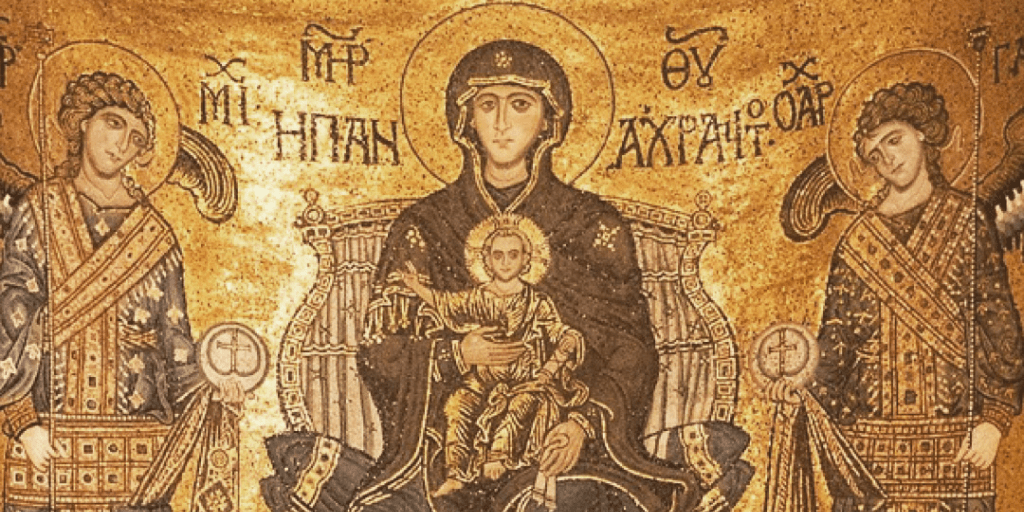
In the Orthodox church, it’s not the voice of the soloist that we listen for, it’s the collective voice of the choir — of the saints, of the scriptures, of the liturgical texts, of the sacred art… all of these things proclaiming with one voice, the truth of Christ.
The word “heresy” comes from a Greek word meaning to pick and choose. If you pick and choose versus from the scriptures or quotes from the Fathers, you can string together whatever teaching you want. This is not what we’re interested in. We’re interested in the collective voice, we have a “concern with for whole.” Because when the Church speaks “with one mouth and one heart,” she declares the truth that will set us free.
Love in Christ,
+FrAJ




 Eastern Orthodoxy