Where it all began

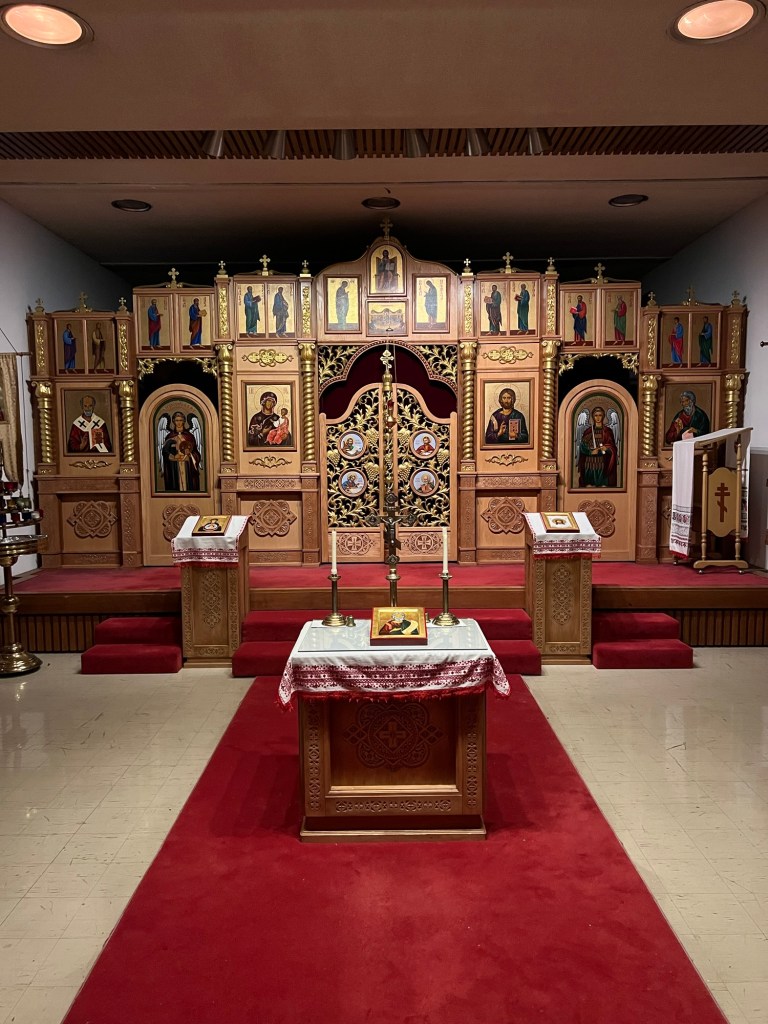
Recently, I had the pleasure of visiting my Alma Mater, St. Andrew’s College, in Winnipeg, Canada. It’s been years since I’ve been back to the seminary. As always, the place I’m drawn to is the chapel. This is where I entered for the first time into the routine of the daily services, together with festal celebrations and the profound beauty of our seasonal liturgical life. These services, so filled with divine and life-giving rhythms and patterns, flow like a peaceful yet powerful river both through the Church year and through our own hearts.

Judgment and Grace as One


“He will baptize you with the Holy Spirit and fire.” (Luke 3:16) The same divine fire brings warmth to the repentant and burns the unrepentant. God’s presence doesn’t change—we do. 

Receive these messages in your inbox every weekday. Subscribe to my Fellowship of St Theophan the Recluse newsletter → [Subscribe]

The Ministry of Jesus in Galilee: Insights from Luke 4:14-15


In this excerpt from my online Bible Study, we explore Luke 4:14-15, where Jesus returns to Galilee empowered by the Spirit and begins teaching in synagogues, earning widespread praise. Saint Ephraim the Syrian and Origen emphasize Jesus’ spiritual power and the significance of teaching within the synagogue. The discussion highlights the centrality of the worshiping community in experiencing and learning the faith. The episode concludes with a reflection on facing temptations with God’s strength and becoming ambassadors of His grace.

The People that We Meet


When we give our lives over to Christ, one of the first places He begins working is in the people we meet. It’s easy to say, “Thank you, God, for bringing this person into my life,” when someone is helpful, supportive, and inspiring.
But what about those people who test our patience, who annoy us, or who we’d rather avoid? Can we still say, “Thank you, God, for bringing this person into my life”?
Every person Christ sends our way is there for a reason—either so we can serve Christ through them, or so we can learn something about ourselves that’s needed for our spiritual healing and growth. “As iron sharpens iron, so one person sharpens another.” (Proverbs 27:17)
Whether a person brings us joy or frustration, every encounter is a chance to break free from our egos and selfishness, and to truly live for others. The only thing we need to ask God is for the wisdom to discern why He brought us together.
Even those who annoy or persecute us are there to teach us compassion, kindness, and forgiveness. They help us learn to deal with negative emotions without letting bitterness take root. And sometimes, we’re the ones God has sent into someone else’s life to help them grow in patience and love.

What is the Fear of God?


What do we mean in the Eastern Orthodox Church when we talk about the fear of God? The following quotes offer important insights into this question.
Saint Dorotheos of Gaza wrote:
“A godly man fears and keeps to God’s will, not for fear of punishment or to avoid condemnation, but because he has tasted the sweetness of being with God, and fears he may fall away from it. He fears to be turned from it.”

Saint Theodorus the Great also writes:
“The greater our longing for God, the greater grows our fear. And the more we hope to attain God, the more we fear him. For as nothing is more blessed than to attain God, so nothing is more terrible than this great fear of losing him.”

The 20th-century elder, Elder Thaddeus of Vitovnica, said:
“The fear of God is when you love him, when you truly love him with all your heart, and you strive never to offend or sadden him—not only with your deeds, actions, and words, but also with your thoughts. You try to please him in everything you do or say. That is the fear of God, the fear of doing anything that might sadden or offend our parents.”

And in the book The Mountain of Silence, Kyriakos Markides sums it up like this:
“The fear of God of the saints refers to the fear of losing their connection with God, the divine lover, not the fear of a patriarchal despot who rules over the universe with an iron fist.”

We do not have, in the Eastern Orthodox Church, the image of God as Zeus—a powerful, mighty being waiting for people to mess up so he can lower the boom on them. For us, the fear of God arises when we realize, even if just for a moment, the beauty and fulfillment we find in communion with God. Then, we do not want to lose this Divine connection, and we do not want to conduct ourselves in a way that would result in losing it.

It is the fear of losing God, not the fear of God himself.

Whenever I post something like this, at least a couple of people respond with the quote, “The fear of the Lord is the beginning of wisdom.” These words are repeated several times in the scriptures. One place we find them is in Proverbs 9:10. And yes, the fear of God is the beginning of wisdom. It can be an effective wake-up call and a good starting point. It is the natural response of a humble heart before the Lord, his saints, and his angels.

But it is not a place that God expects us to be stuck in forever. He does not need us to fear him. And we remember that in the scriptures whenever an angel visits someone and the person is afraid, what is the first thing the angel says? “Don’t be afraid.”

St. Anthony the Great, referencing 1 John 4, said:
“I no longer fear God, but I love him, for perfect love casts out fear.”

So, fear can be a starting point for us. It can be what we need to take this whole thing seriously, but it is not where we must remain. It is a beginning, but ultimately everything must be driven by love.

Because frankly, if the reason I come to church, pray, read the Bible, and do all these things is simply because I am afraid of being punished, then I am making it about me. I do not want to get punished, so that is why I am doing these things.

In truth, our motivation should be the love of God and the desire for an intimate fellowship with him unto the ages of ages.

The Holy Mystery of Matrimony


​Too Big for Words – Part 7

In this message from our Holy Mysteries sermon series, we reflect on the Holy Mystery of Matrimony. In the Orthodox Tradition, a marriage is a sacred offering—brought into the church for God’s blessing, like Jesus blessing the marriage in Cana of Galilee by performing his first miracle there, turning water into wine.

Our Father


Much has been written about the Lord’s Prayer and you can find hours and hours of podcast episodes on it. It’s worth taking the time to look these sources up (this lecture by Fr. Thomas Hopko is a great place to start).

St. John Chrysostom said:

The Lord teaches to make our prayer common, in behalf of our brethren also. Because he does not say: “My Father, in Heaven,” but, “Our Father,” offering up his supplications for the body in common, and in no way only looking out for his own good, but looking out in all things for his neighbor’s good. And by this he at once takes away hatred, and quells pride, and casts out envy, and he brings in selfless love – the mother of all good things, and exterminates the inequality of human things…

What St. John is pointing out is that we don’t say, “My Father,” we say, “Our Father.” The Lord’s Prayer is the great equalizer in Christianity. Regardless of our race or cultural heritage, of our station in life, or of any other demographic into which we can be separated, we are all united in calling God: Our Father.

An ancient Christian saying states that “One Christian is no Christian.” Christianity is relational at its core. The word for Church in the New Testament, “ecclesia,” literally means a people called together. This is how the Lord Jesus Christ defines his people: as one Body, united by his grace.

In my journey through life, I don’t walk alone. I walk together with all of my brothers and sisters, untied through Christ as a family of faith, children of Our Father in heaven.