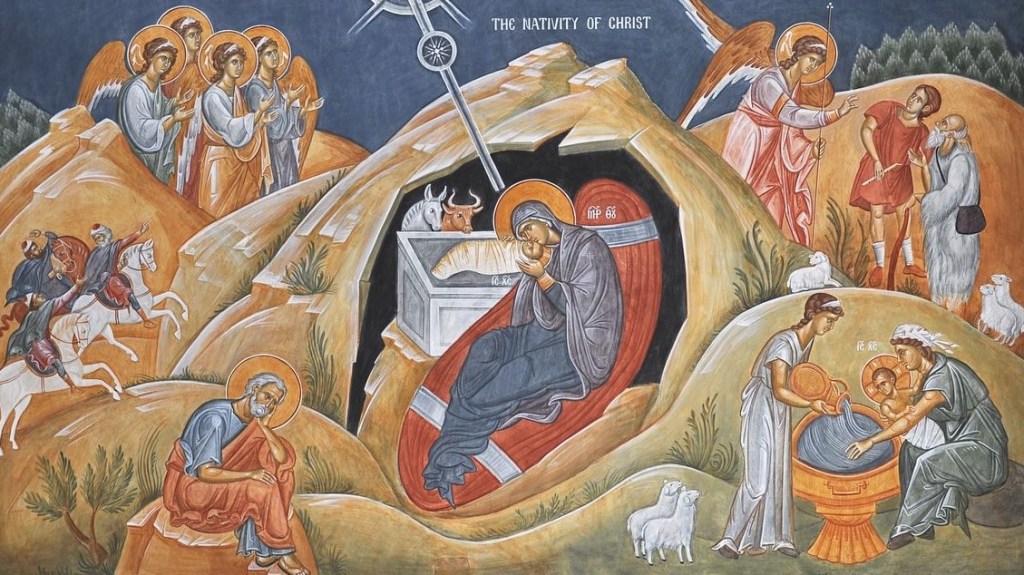
This is Saint Isaac the Syrian on the Feast of Christ Nativity: “This is the night of the most gentle one. Let no one be cruel. This is the night of the humble one. Let no one be proud. Now is the day of joy. Let us not revenge.” → [Watch Video]
This is Saint Isaac the Syrian on the Feast of Christ Nativity: “This is the night of the most gentle one. Let no one be cruel. This is the night of the humble one. Let no one be proud. Now is the day of joy. Let us not revenge.” → [Watch Video]
The Kingdom of God is both a coming reality and is a present reality in the hearts of believers. To have a life in Christ is to be in the Kingdom both now and unto the ages of ages.
__
Help keep my ministry going and growing…
Buy me a coffee → https://www.buymeacoffee.com/frajarmus ☕️
Many thanks for your support! Prayers & Blessings 🙏 ☦️
St Paul calls envy (or covetousness) idolatry. There’s one way to overcome it – radical gratitude.
The opening lines of the Parable of the Good Samaritan are enough to show us why this is truly Good News.
The title says it all: How the Orthodox Church defines the fear of God. My sermon at St Nicholas Cathedral in Fort Wayne, Indiana, on Sunday, October 29, 2023.
Here’s a sermon from a couple of years ago at St. Nicholas Cathedral in Fort Wayne, Indiana. Is there a code in the Bible? Yes, actually. But it’s no secret… and it points to Good News for all humanity.
__
Help keep my ministry going and growing… Buy me a coffee → https://www.buymeacoffee.com/frajarmus ☕️
Many thanks for your support! Prayers & Blessings 🙏 ☦️
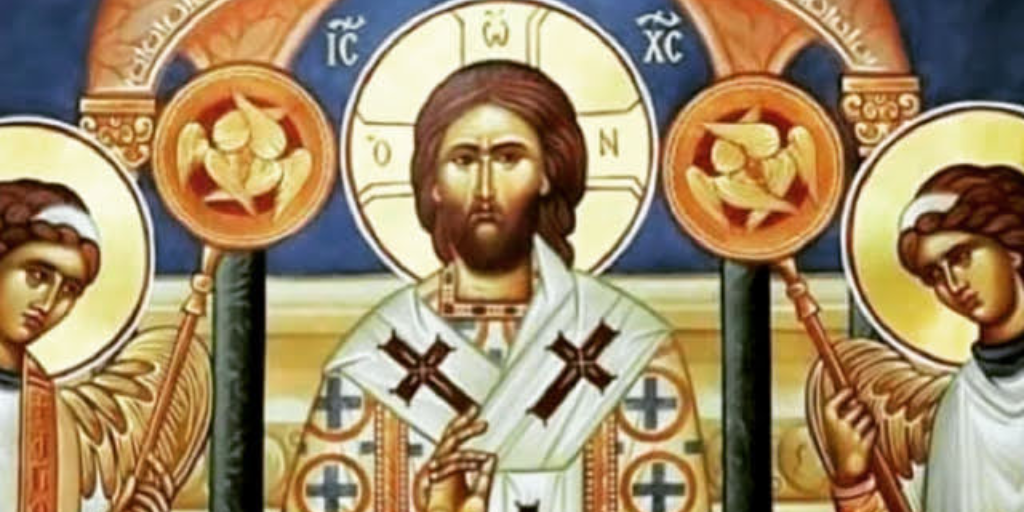
In the creed, we defined the churches Catholic. This comes from the Greek word “katholike,” meaning “concerning the whole.” The church preaches the whole Gospel, to the whole of humanity, throughout the whole span of history.
Preaching the Gospel “as a whole” means that we need to look at the entire scriptures as a single unit. We do not focus on one book, one chapter, one verse. Everything is looked at within the context of the broader message. We interpret everything with a “concern for the whole” story.
Consider, for example, what Saint Paul says to the Christians of Corinth: “For though you have countless guides in Christ, you do not have many fathers. For I became your father in Christ Jesus through the gospel.” (I Corinthians 4:14)
Paul clearly identifies himself as the father of the Christians of Corinth. But what about what Christ says in the Gospel of Matthew: “Call no man father?” How do we reconcile Jesus’ teaching in Matthew with the apostle identifying himself as “Father Paul” to the Christians of Corinth?
St Paul does this because he understands that there’s a specific context for the teaching, “Call no man father.” There are times when it is completely appropriate to call our spiritual leaders, “Father.” This is a term that has been used for clergy — beginning with bishops, and later priests — for centuries in the Christian Church.
When we look at the teaching, “Call, no man father,” or any teaching of Christ in the Gospels, we need to interpret it through the wider context of Church life, including the wider context of scriptures. “Call no man father” in Matthew is correctly understood within this broader framework. (Like Paul identifying himself as the Father of the Corinthian Christians, or the multiple times our spiritual forebears are called “father” and “fathers” in the Book of Acts.)
St. Ignatius Brianchaninov said:
“When on a clear fall night I gaze upon the clear heavens, illumined by innumerable stars that send out a single light, then I say to myself: thus are the writings of the holy fathers. When on a summer’s day I gaze upon the wide sea, covered with a multitude of distinct waves, driven by a single wind to a single end, a single pier, then I say to myself: such are the writings of the fathers. When I hear a well-ordered choir, in which different voices sing a single hymn in shimmering harmony, then I say to myself: such are the writings of the fathers.”
In the Orthodox church, it’s not the voice of the soloist that we listen for, it’s the collective voice of the choir — of the saints, of the scriptures, of the liturgical texts, of the sacred art… all of these things proclaiming with one voice, the truth of Christ.
The word “heresy” comes from a Greek word meaning to pick and choose. If you pick and choose versus from the scriptures or quotes from the Fathers, you can string together whatever teaching you want. This is not what we’re interested in. We’re interested in the collective voice, we have a “concern with for whole.” Because when the Church speaks “with one mouth and one heart,” she declares the truth that will set us free.
Love in Christ,
+FrAJ
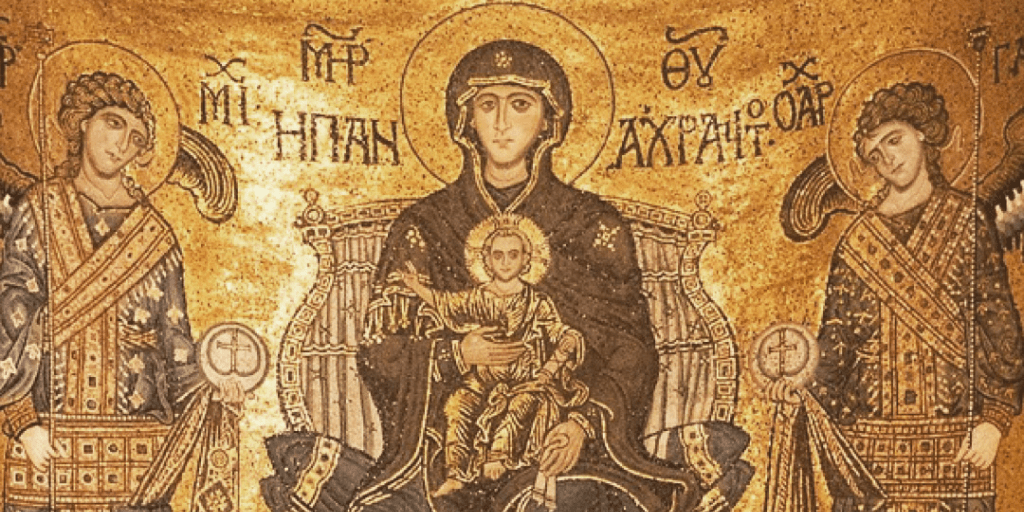
Here are some more quotes on Mary from Church Fathers throughout the centuries:
“I have been amazed that some are utterly in doubt as to whether or not the holy Virgin is able to be called the Mother of God. For if our Lord Jesus Christ is God, how should the holy Virgin who bore him not be the Mother of God?” (St Cyril of Alexandria, 5th century)
“Though still a virgin she carried a child in her womb, and the handmaid and work of his wisdom became the Mother of God.” (St Ephraim the Syrian, 4th century)
“The first thing which kindles ardor in learning is the greatness of the teacher. What is greater than the Mother of God? What more glorious than she whom Glory Itself chose?” (St Ambrose of Milan, 4th century)
“For Luke, in the inspired Gospel narratives, delivers a testimony not to Joseph only, but also to Mary, the Mother of God, and gives this account with reference to the very family and house of David.” (St Gregory the Wonderworker, 3rd century)
“And if the former (Eve) did disobey God, yet the latter (Mary) was persuaded to be obedient to God, in order that the Virgin Mary might become the advocate of the virgin Eve. And thus, as the human race fell into bondage to death by means of a virgin, so it is rescued by a virgin; virginal disobedience having been balanced in the opposite scale by virginal obedience.” (St Irenaeus of Lyons, 2nd century)
“Eve, who was a virgin, willingly brought forth the word of the serpent into the world. Mary, the Virgin, willingly brings forth the Word of God into the world.” (St Justin Martyr, 2nd century)
The ancient Christian Fathers with one voice honor Mary as the Virgin Mother of God, whose obedience to the will of the Father opens the doors of salvation for all. This understanding echoed through the centuries in Christianity, even in some most unexpected places. Consider the following:
“I firmly believe that Mary, according to the words of the Gospel, as a pure virgin brought forth for us the Son of God, and in childbirth and after childbirth forever remained a pure, intact virgin.” (Ulrich Zwingli)
“To this day we cannot enjoy the blessing brought to us in Christ without thinking at the same time of that which God gave as adornment and honor to Mary in willing her to be the mother of his only-begotten Son.” (John Calvin)
“She is rightly called not only the mother of the man, but also the Mother of God.” (Martin Luther)
Through the prayers of the Theotokos, may our Lord Jesus Christ have mercy on us.
Love in Christ,
+FrAJ
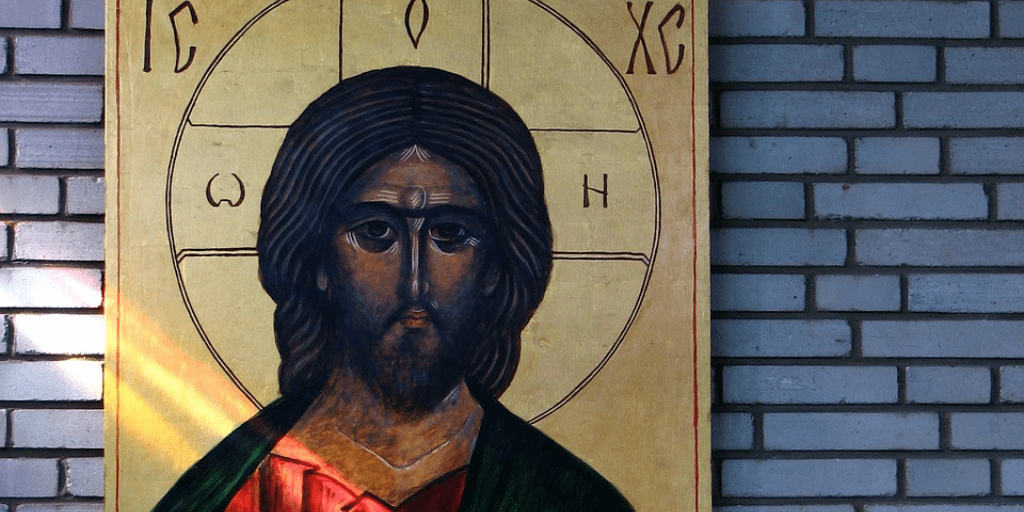
“Blessed are you, O Lord, teach me your statutes!” This quote from Psalm 118 is often repeated in Orthodox worship. There’s even a hymn in our morning service, Matins, built around it.
Thinking about God’s statutes might seem pretty daunting. In Judaism, in addition to the Torah, there were over 600 Commandments known as “Mitzvot,” acts that resulted in God’s blessing when fulfilled. So when people ask Jesus about the greatest commandment they’re not always trying to trip him up. Sometimes this question was driven by a sincere desire to know. Thankfully, Jesus gave us a way of streamlining the issue.
When asked about the greatest commandment, Christ offers two that are closely related: “You shall love the Lord your God with all your heart, with all your soul, with all your strength,” and, “Love your neighbor as yourself.”
Before we go on, we should note that these two commandments do not appear in sequence in the scriptures. “Love God…” is from Deuteronomy 6, and “Love your neighbor…” is from Leviticus 19.
We often misread that second commandment as “Love your neighbor as you love yourself.” That’s not what it says. It says love your neighbor “as yourself.” That’s an important distinction because it’s not just about treating others the way you would treat yourself. Actually, it zeroes in on the fact that all human life is intricately linked.
We need to look at our neighbors’ lives, their joy, their pain, as extensions of our own lives. The second great commandment reminds us that we’re all connected. Whether we are aware of it or not, every life has an impact on the lives of others.
Love in Christ,
+FrAJ
 Eastern Orthodoxy