The Word Creates

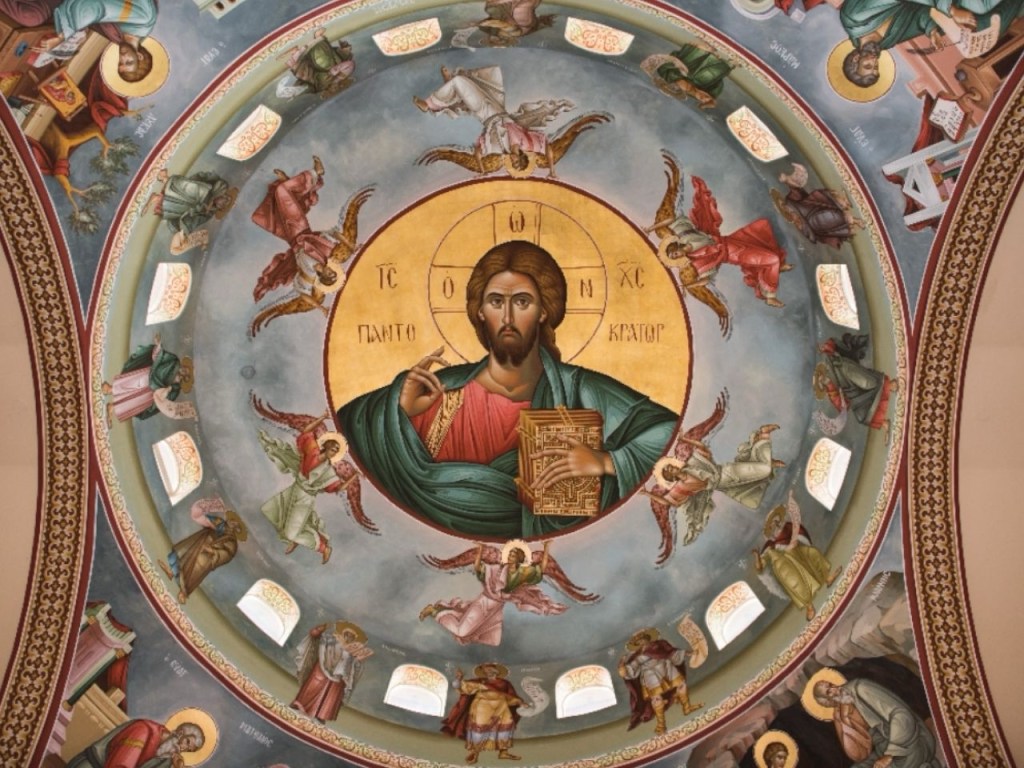
The opening of Genesis and John shows that the world is made by God’s Word. Genesis 1 depicts God speaking the universe into existence: God does not build or struggle with raw materials; he simply speaks, and the Cosmos comes into being. Creation itself is a kind of liturgy, ordered and sustained by the living Word of God.

This shapes how we understand both the world and Jesus Christ. When Scripture says that God creates by speaking, it teaches that his Word is not just information but life‑giving power. God’s speech is supremely effective; it accomplishes what it declares. Every creature exists because it has been personally addressed by God.

The Gospel of John then makes this personal Word explicit: “In the beginning was the Word, and the Word was with God, and the Word was God.” Before anything was made, the Word already is, in perfect communion with the Father and truly God. “All things were made through him” means that the same divine Word who speaks in Genesis is the eternal Son, the one through whom all things came to be.

Creation is therefore Trinitarian: the Father creates through the Son in the Holy Spirit. The order and beauty of the world reflect the wisdom of the Word, the signature of Christ on everything that exists. The One who will later walk the roads of Galilee is the same One through whom galaxies, oceans, and atoms were brought into being.

The Holy Evangelist John then makes a staggering claim: “The Word became flesh and dwelt among us.” The eternal Word who called light out of darkness enters the very world he made, taking on our nature without ceasing to be who he is eternally. The hands that shaped the stars become the hands of a carpenter and are later stretched out on the Cross. The voice that said “Let there be light” will cry, “It is finished,” bringing about a new creation.

To say that Jesus Christ is the Word of God is to say that the Savior of the world is also its Maker. In him, the first creation and the new creation meet. He still speaks, calling each of us out of darkness into his light, and when he speaks, things change: the Word who once created now re‑creates, restoring in us the image first spoken into being at the dawn of this age.
Christ’s Compassionate Mission: Healing the Gadarene Demoniac

The account of the Gadarene demoniac begins with Jesus intentionally traveling into Gentile territory — a region where no one expected a Jewish teacher to go — to seek rest. Instead of respite, He encounters a man who is possessed by many demons and has been completely cast out by his own community, living among the tombs and bound by chains.

Despite the man’s terrifying condition and social isolation, Christ is not afraid or offended; He approaches the demoniac with profound compassion. The Church Fathers see this moment as symbolic of Christ’s entire messianic mission. No one, no matter how lost or broken, has drifted so far as to be outside the reach of God’s love and saving power.

The healing of the Gadarene demoniac assures us that Christ’s grace extends to the lonely, the forsaken, and those on the very edges of community. Jesus invites all to experience dignity and new life in Him, drawing us from the fringes into his loving embrace, where we stand together as brothers and sisters in a communion of Divine love.

“Do Justice, Love Kindness, Walk Humbly”

People were deeply moved by St. John the Forerunner’s warning of the coming judgment and wanted to know how to amend their lives. St. John’s answer was grounded in mercy and justice—the same command proclaimed by the prophet Micah, that we “do justice, love kindness, and walk humbly with God.”

John was not giving a detailed code of behavior for every circumstance, but rather revealing the heart of the law. Repentance meant a shift away from “each man for himself” to becoming one’s brother’s keeper. True turning to God always includes turning toward the neighbor, because love of God and love of neighbor cannot be separated.

In practical terms, this means that part of faithfulness to God is found in serving others. Just as our sins often make life harder for those around us, repentance produces the opposite effect: making another’s life a little lighter, even through small acts of mercy. These are the fruits worthy of repentance, the visible sign that one’s heart has truly turned toward God.

A Cross of Tragedy and Victory

Metropolitan Anthony Bloom said that the Cross is both a tragedy and a victory, revealing what is perhpas the greatest and most beautiful paradox in the Gospel. The tragedy lies in Christ’s innocent suffering and the shameful nature of crucifixion—a punishment for criminals and political outcasts—yet Christ willingly endures it out of  selfless love.

Our Lord did not will to be lifted up on the Cross for his own sake. He did it for us. Because Christ’s death was freely offered, the Cross becomes the act of sacrificial love that transforms death from tragedy to glory. “The Cross,” he said, “an instrument of infamous death… because Christ’s death was that of an innocent, and because this death was a gift of self in an act of love—becomes victory.”

Christians are called to embrace this paradox: taking up the Cross means denying selfishness and opening ourselves to divine love, which is, in Metropoltian Anthony’s words, “love sacrificial, love crucified, but love exulting in the joy of life.” This transformation demonstrates how defeat leads to glory through self-emptying love and ultimate hope.

Judgment and Grace as One


“He will baptize you with the Holy Spirit and fire.” (Luke 3:16) The same divine fire brings warmth to the repentant and burns the unrepentant. God’s presence doesn’t change—we do. 

Receive these messages in your inbox every weekday. Subscribe to my Fellowship of St Theophan the Recluse newsletter → [Subscribe]

The Ministry of Jesus in Galilee: Insights from Luke 4:14-15


In this excerpt from my online Bible Study, we explore Luke 4:14-15, where Jesus returns to Galilee empowered by the Spirit and begins teaching in synagogues, earning widespread praise. Saint Ephraim the Syrian and Origen emphasize Jesus’ spiritual power and the significance of teaching within the synagogue. The discussion highlights the centrality of the worshiping community in experiencing and learning the faith. The episode concludes with a reflection on facing temptations with God’s strength and becoming ambassadors of His grace.

Why Jesus Silenced Demons: A Spiritual Insight


“And in the synagogue there was a man who had the spirit of an unclean demon, and it shouted with a loud voice, saying, ‘Leave us alone. What have we to do with you, Jesus of Nazareth? Have you come to destroy us? I know who you are, the Holy One of God.’ But Jesus rebuked it, saying, ‘Be quiet and come out of him.’ Then the demon threw him down in their midst and went out of him, having done him no harm.” (Luke 4:33-35)

In the above passage, note that the demon identifies Jesus as the “Holy One of God.” In Psalm 16, it says, “you will not abandon me to Hades and nor let your Holy One see corruption.” “Holy One” is a term for the Messiah.

The demons say, “we know who you are.” But Jesus says, “be quiet.” He stops the demon from confessing him as the Holy One of God. He doesn’t allow him to say this.

St. Cyril of Alexandria says, “He would not permit the unclean demons to confess him. It was not right for them to usurp the glory of the apostolic office or to talk of the mystery of Christ with polluted tongues.”

Knowing who Jesus is is not enough. St. Augustine says, “the devils confessed Christ, but lacking charity, lacking selfless love, it availed nothing. Do not boast of that faith that puts you at the same level with the devils.”

Again in Luke 4:41 we read, “And also demons were coming out of many people shouting and saying, ‘You are the Christ, the Son of God.’ But he rebuked them and would not allow them to talk because they knew he was the Christ.”

St. Athanasius the Great says, “Even when the demons spoke the truth, when they said, ‘You are the Son of God,’ the Lord himself silenced them and forbade them to speak. He did this to keep them from sowing their own wickedness in the midst of the truth. He also wished us to get used to never listening to them, even though they seem to speak the truth.”

There are a couple of very important things to note in this insight from St. Athanasius.

First of all, temptations are very rarely enticements inciting us to do something that is outright evil. Most often they are a distortion of the truth. Jesus does not want the demons to confess him as the Christ, the Son of God, because he knows that they will take that truth and they will distort it in such a way that will confuse the people and take them away from him.

We can see this all the way back to Genesis 3 with the first temptation. The devil says to Eve, “If you eat the fruit of the tree of the knowledge of good and evil, you will become like God. And God does not want that.” This is a twisting of the truth because God does want us to become like him, but we can only become like him with him by participating in the life that he calls us to. We can’t do it on our own. So he doesn’t even allow the demons to declare the truth because he knows they’re just going to twist the truth up.

The second thing St. Athanasius says is Christ wants the people to get used to never listening to the demons. In our lives, we give agency to what we pay attention to. The things that we pay attention to, we give power to in our lives. So by listening to the demons, even when they are speaking the truth, we’re allowing them access into our hearts and minds, and eventually this will turn on us.

Even though these demons are saying the absolute truth, Jesus is the Christ, is the Son of God, he says, “no, you are not allowed to say that.”

Jesus’ refusal to accept testimony from demons, even when they spoke truth, reveals that the source of the message matters as much as the message itself. In our own spiritual lives, we must learn to discern between authentic revelation that draws us closer to God and deceptive truths that, while factually correct, lead us away from genuine relationship with Christ. The demons knew who Jesus was, but their knowledge was sterile, lacking the love and surrender that transforms mere intellectual assent into saving faith. As we navigate a world full of competing voices claiming spiritual authority, may we cultivate the wisdom to recognize that true knowledge of God only comes from humble hearts that seek Him in truth and love.

Echoes of Heaven


For first-time visitors to an Orthodox Church, one of the most striking aspects of the worship experience is the absence of musical instruments. This isn’t merely a stylistic choice; it’s a deliberate theological expression rooted in the history and beliefs of Eastern Orthodoxy.

The roots of Eastern Orthodoxy trace back to the earliest Christian communities, offering worship practices that have remained consistent for nearly two millennia. Historically, early Christians were influenced by Jewish synagogue practices, which had already moved away from instrumental accompaniment by the first century AD. The Early Christians associated instruments with pagan rituals and secular entertainment, leading them to favor a cappella singing as a way to distance themselves from these practices.

In Eastern Orthodoxy, the human voice is considered the perfect instrument. Created as we are in God’s image, our voices are seen as the purest form of musical expression. When Orthodox Christians sing, they are not merely performing music; they are offering their very breath as prayer. The voice, emerging from within the body, symbolizes prayer rising from the heart.

The term “Orthodox” itself is significant, with “doxa” meaning glory in Greek. This word carries two meanings: to praise and to make clearly known. The human voice is believed to be the most perfect way to offer God glory, as it allows for both praise in words and music and the proclamation of Christ’s Gospel through hymns and chanted prayers.

Orthodox worship aims to create an “icon of sound,” a window into heaven, not only through what is seen but also through what is heard. The unadorned human voice captures the essence of angelic worship. In a world increasingly dominated by electronic and produced sound, there is something refreshingly authentic about spaces where human voices alone fill the air.

Through psalms, hymns, and spiritual songs, Orthodox Christians offer praise to God and make His truth — that truth that sets us free — known to all who experience the timeless, angelic beauty of the Orthodox Christian liturgy.

Our Father


Much has been written about the Lord’s Prayer and you can find hours and hours of podcast episodes on it. It’s worth taking the time to look these sources up (this lecture by Fr. Thomas Hopko is a great place to start).

St. John Chrysostom said:

The Lord teaches to make our prayer common, in behalf of our brethren also. Because he does not say: “My Father, in Heaven,” but, “Our Father,” offering up his supplications for the body in common, and in no way only looking out for his own good, but looking out in all things for his neighbor’s good. And by this he at once takes away hatred, and quells pride, and casts out envy, and he brings in selfless love – the mother of all good things, and exterminates the inequality of human things…

What St. John is pointing out is that we don’t say, “My Father,” we say, “Our Father.” The Lord’s Prayer is the great equalizer in Christianity. Regardless of our race or cultural heritage, of our station in life, or of any other demographic into which we can be separated, we are all united in calling God: Our Father.

An ancient Christian saying states that “One Christian is no Christian.” Christianity is relational at its core. The word for Church in the New Testament, “ecclesia,” literally means a people called together. This is how the Lord Jesus Christ defines his people: as one Body, united by his grace.

In my journey through life, I don’t walk alone. I walk together with all of my brothers and sisters, untied through Christ as a family of faith, children of Our Father in heaven.