Christ’s Compassionate Mission: Healing the Gadarene Demoniac

The account of the Gadarene demoniac begins with Jesus intentionally traveling into Gentile territory — a region where no one expected a Jewish teacher to go — to seek rest. Instead of respite, He encounters a man who is possessed by many demons and has been completely cast out by his own community, living among the tombs and bound by chains.

Despite the man’s terrifying condition and social isolation, Christ is not afraid or offended; He approaches the demoniac with profound compassion. The Church Fathers see this moment as symbolic of Christ’s entire messianic mission. No one, no matter how lost or broken, has drifted so far as to be outside the reach of God’s love and saving power.

The healing of the Gadarene demoniac assures us that Christ’s grace extends to the lonely, the forsaken, and those on the very edges of community. Jesus invites all to experience dignity and new life in Him, drawing us from the fringes into his loving embrace, where we stand together as brothers and sisters in a communion of Divine love.

The Soul-Body Connection

St. Paul prays that our “spirit and soul and body” be kept rightly ordered and blameless before Christ, showing that each part has its place under God. In the same spirit, he warns that if we “live according to the flesh” we move toward death, but if by the Spirit we put to death the deeds of the body, we truly live, pointing to the danger of bodily impulses ruling over the soul. (1 Thessalonians 5:23; Romans 8:13)

Human beings were created to be a harmonious union of soul and body, functioning in the Divinely-instituted framework of the soul guiding the body. When this order is disrupted, when the body overpowers the soul, we are left with a distorted experience of both God and the world. When the body leads, people become fragmented, restless, at the whim of obsessions, compulsions, and addictions.

Instead, we are meant to lead with our spiritual sense, known as the nous. In Orthodox teaching, the nous is the highest faculty, capable of perceiving God and the spiritual realm. When the nous is darkened by passions, it leaves a person spiritually blind; when it is illumined, it allows the soul to discern God’s will and align our lives with it. This gives right shape and order to our lives: instead of becoming our masters, food, drink, work, rest, and the innocent joys of the body are received as gifts and offered back to God in praise and thanksgiving.

From Wilderness to Paradise

Immediately before beginning his messianic ministry, Jesus is lead into the wilderness by the Holy Spirit, where He fasts and faces temptation for forty days. This passage is deeply symbolic: it fulfills the Old Testament pattern of Israel journeying in the wilderness for forty years after being delivered through the Red Sea—a foreshadowing of Christian baptism, which delivers us from sin and death.
Jesus’s time in the wilderness also prefigures the spiritual journey of every Christian, showing that following Christ does not remove struggles or temptations, but instead marks the beginning of deeper spiritual warfare. (An example of what Fr. Thomas Hopko called, “The bad news of the Good News.”) This struggle is expected for those serious about their faith, as temptations often increase when we draw closer to Christ. The wilderness represents both a battleground against evil and a place where God’s peace and victory can be found. Facing these struggles is not a sign of failure, but a sign that one is authentically on the path toward God.
St. Ambrose of Milan offers further insight: just as Adam was sent into the wilderness from paradise, Christ—the Second Adam—returns from the wilderness to lead humanity back to God. Jesus deliberately enters the wilderness of the world’s brokenness to seek out the lost and guide them toward the kingdom of God, showing that His saving work involves joining us where we are and bringing us to where He is—at the right hand of the Father.

When We Say “the Fear of God”…

Immediately before Holy Communion, the deacon comes out of the altar with the holy Chalice, exclaiming: “With the fear of God… draw near.” When we say, “the fear of God,” what are we actually talking about?

While the world’s fear makes us hide and leads us into isolation—like Adam and Eve in the garden—the fear that God calls us to cultivate is life-giving.  When we humbly become aware of our weaknesses, let that awareness inspire hope—not despair. Like the sick and demon-possessed in the days of our Lord’s earthly ministry, we run with confidence into Christ’s embrace, certain that healing and forgiveness await all who seek Him.

The true “fear of God” is not about anxiety or trembling before an indifferent despot, but about cherishing the precious relationship we have with our loving Creator. Let us remember the wisdom of the saints: those who have tasted the peace and sweetness of God’s presence fear only one thing—losing that intimacy with Him. This holy fear is not about dreading punishment, but about never wanting to be separated from God’s love.

Where it all began

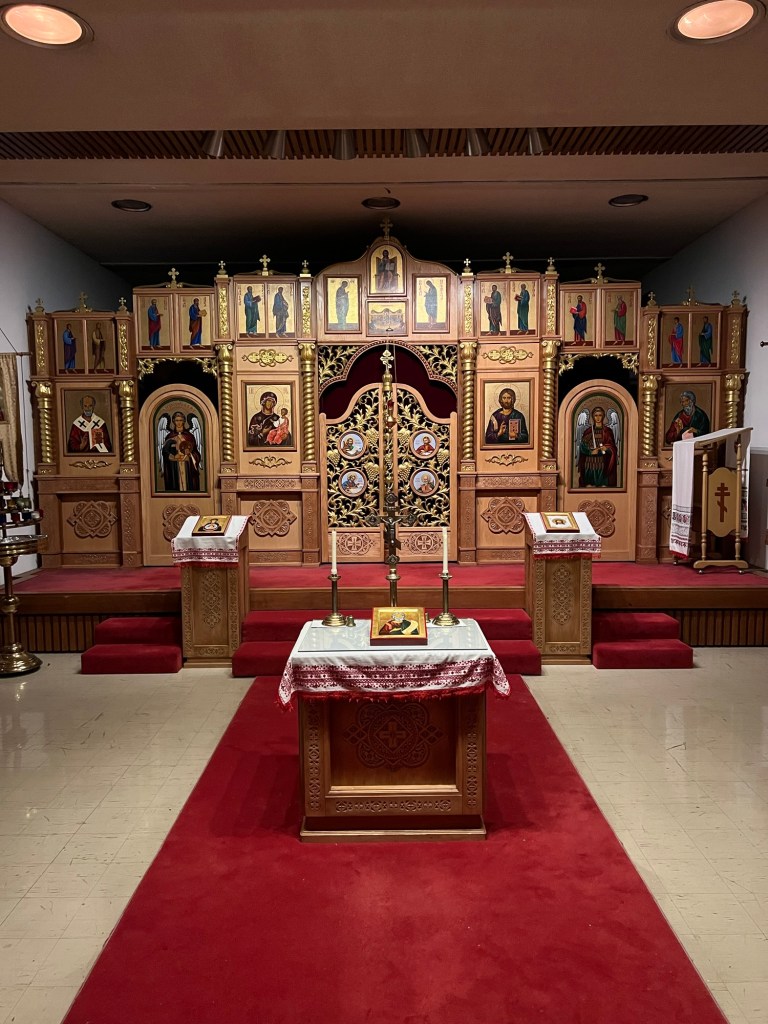
Recently, I had the pleasure of visiting my Alma Mater, St. Andrew’s College, in Winnipeg, Canada. It’s been years since I’ve been back to the seminary. As always, the place I’m drawn to is the chapel. This is where I entered for the first time into the routine of the daily services, together with festal celebrations and the profound beauty of our seasonal liturgical life. These services, so filled with divine and life-giving rhythms and patterns, flow like a peaceful yet powerful river both through the Church year and through our own hearts.

Judgment and Grace as One


“He will baptize you with the Holy Spirit and fire.” (Luke 3:16) The same divine fire brings warmth to the repentant and burns the unrepentant. God’s presence doesn’t change—we do. 

Receive these messages in your inbox every weekday. Subscribe to my Fellowship of St Theophan the Recluse newsletter → [Subscribe]

The Ministry of Jesus in Galilee: Insights from Luke 4:14-15


In this excerpt from my online Bible Study, we explore Luke 4:14-15, where Jesus returns to Galilee empowered by the Spirit and begins teaching in synagogues, earning widespread praise. Saint Ephraim the Syrian and Origen emphasize Jesus’ spiritual power and the significance of teaching within the synagogue. The discussion highlights the centrality of the worshiping community in experiencing and learning the faith. The episode concludes with a reflection on facing temptations with God’s strength and becoming ambassadors of His grace.

If We Confess Our Sins


Too Big for Words – Part 5

God calls us to a life of faith and holiness, but if we’re being honest with ourselves, we’ll admit that we fail at it quite regualrly. Fortunately, God’s mercy endures forever, and his has given his children a way back to him. Every time we fall, we get back up again with the assurance of God’s forgiveness.
__
Want to learn more about Eastern Orthodoxy? → https://fostrorthodoxy.podia.com

Chrismation – Born of the Spirit

Too Big for Words – Part 3

In John 3 Jesus says that we need to be “born from above” (“born again”) “of water and Spirit”. In this video, we learn about the Eastern Orthodox Church’s understanding of the birth of the Holy Spirit. We discover that the roots of this belief are found in the earliest days of Christianity.

__

Want to learn more about Eastern Orthodoxy? → https://fostrorthodoxy.podia.com
Support my online ministry ➔ https://www.buymeacoffee.com/frajarmus
Many thanks! Prayers & Blessings.