The Soul-Body Connection

St. Paul prays that our “spirit and soul and body” be kept rightly ordered and blameless before Christ, showing that each part has its place under God. In the same spirit, he warns that if we “live according to the flesh” we move toward death, but if by the Spirit we put to death the deeds of the body, we truly live, pointing to the danger of bodily impulses ruling over the soul. (1 Thessalonians 5:23; Romans 8:13)

Human beings were created to be a harmonious union of soul and body, functioning in the Divinely-instituted framework of the soul guiding the body. When this order is disrupted, when the body overpowers the soul, we are left with a distorted experience of both God and the world. When the body leads, people become fragmented, restless, at the whim of obsessions, compulsions, and addictions.

Instead, we are meant to lead with our spiritual sense, known as the nous. In Orthodox teaching, the nous is the highest faculty, capable of perceiving God and the spiritual realm. When the nous is darkened by passions, it leaves a person spiritually blind; when it is illumined, it allows the soul to discern God’s will and align our lives with it. This gives right shape and order to our lives: instead of becoming our masters, food, drink, work, rest, and the innocent joys of the body are received as gifts and offered back to God in praise and thanksgiving.

From Wilderness to Paradise

Immediately before beginning his messianic ministry, Jesus is lead into the wilderness by the Holy Spirit, where He fasts and faces temptation for forty days. This passage is deeply symbolic: it fulfills the Old Testament pattern of Israel journeying in the wilderness for forty years after being delivered through the Red Sea—a foreshadowing of Christian baptism, which delivers us from sin and death.
Jesus’s time in the wilderness also prefigures the spiritual journey of every Christian, showing that following Christ does not remove struggles or temptations, but instead marks the beginning of deeper spiritual warfare. (An example of what Fr. Thomas Hopko called, “The bad news of the Good News.”) This struggle is expected for those serious about their faith, as temptations often increase when we draw closer to Christ. The wilderness represents both a battleground against evil and a place where God’s peace and victory can be found. Facing these struggles is not a sign of failure, but a sign that one is authentically on the path toward God.
St. Ambrose of Milan offers further insight: just as Adam was sent into the wilderness from paradise, Christ—the Second Adam—returns from the wilderness to lead humanity back to God. Jesus deliberately enters the wilderness of the world’s brokenness to seek out the lost and guide them toward the kingdom of God, showing that His saving work involves joining us where we are and bringing us to where He is—at the right hand of the Father.

“I Believe”

Looking over the text of the Divine Liturgy, we find very few “I” statements. The Liturgy is a communal act and the content of the prayers and hymns reflect this. There are, however, two notable exceptions. One is in the Creed and the other is the prayer that we read immediately before Holy Communion. Both of these sacred texts begin with the words “I believe.”
By saying “I believe,” we are making a personal confession of faith, aligning ourselves with the collective belief of the Church, first proclaimed by the holy apostles. “I believe” is not an abstract statement—this is the language of conviction, trust, and relationship.
We don’t say “I think” or “I theorize,” but “I believe.” In the New Testament, belief is never just intellectual agreement. It is an act of entrusting ourselves to God. St. Paul says clearly, “If you confess with your mouth that Jesus is Lord and believe in your heart that God raised Him from the dead, you will be saved” (Romans 10:9). To believe with the heart is to place our whole life in God’s hands. We hear this invitation over and over again in the Divine Liturgy: “…let us commend ourselves and each other and all our life to Christ our God.”
The Lord Himself connects belief with life. In John 11:25–26, standing at the tomb of Lazarus, Jesus says, “I am the resurrection and the life. Whoever believes in Me, though he die, yet shall he live, and everyone who lives and believes in Me shall never die. Do you believe this?” The question He asks Martha is the same He asks each of us when we begin the Creed and then again as we approach the Holy Eucharist: Do you believe this?

Where it all began

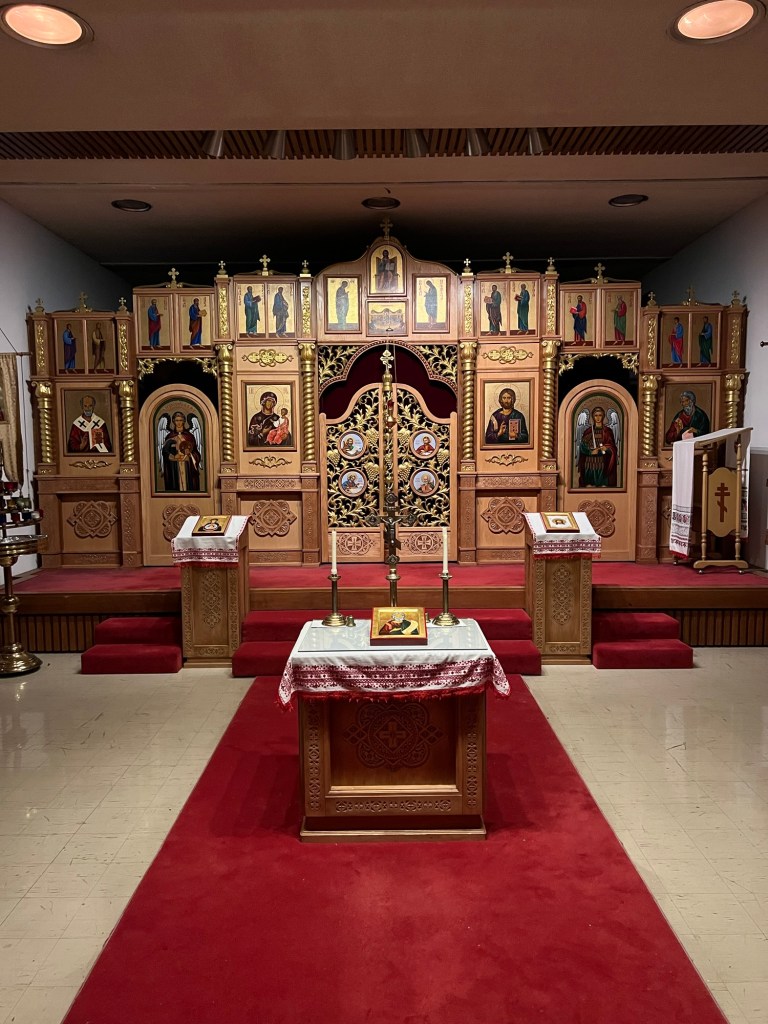
Recently, I had the pleasure of visiting my Alma Mater, St. Andrew’s College, in Winnipeg, Canada. It’s been years since I’ve been back to the seminary. As always, the place I’m drawn to is the chapel. This is where I entered for the first time into the routine of the daily services, together with festal celebrations and the profound beauty of our seasonal liturgical life. These services, so filled with divine and life-giving rhythms and patterns, flow like a peaceful yet powerful river both through the Church year and through our own hearts.

Judgment and Grace as One


“He will baptize you with the Holy Spirit and fire.” (Luke 3:16) The same divine fire brings warmth to the repentant and burns the unrepentant. God’s presence doesn’t change—we do. 

Receive these messages in your inbox every weekday. Subscribe to my Fellowship of St Theophan the Recluse newsletter → [Subscribe]

Exploring the Messianic Fulfillment in Luke 4:17-19


Here’s an excerpt from my online Bible Study. In this discussion of Luke 4, we delve into the second half of Luke 4:17-19, where Jesus reads from Isaiah’s prophecy and declares His Messianic mission. The passage states that the Spirit of the Lord is upon Jesus, anointing Him to preach the Gospel, heal the broken-hearted, deliver the captives, and give sight to the blind. In this discussion, we link Jesus’ mission to the concept of the Jubilee Year, a time of liberty and restoration in Israel, symbolizing the Messianic reign.

The Ministry of Jesus in Galilee: Insights from Luke 4:14-15


In this excerpt from my online Bible Study, we explore Luke 4:14-15, where Jesus returns to Galilee empowered by the Spirit and begins teaching in synagogues, earning widespread praise. Saint Ephraim the Syrian and Origen emphasize Jesus’ spiritual power and the significance of teaching within the synagogue. The discussion highlights the centrality of the worshiping community in experiencing and learning the faith. The episode concludes with a reflection on facing temptations with God’s strength and becoming ambassadors of His grace.

The People that We Meet


When we give our lives over to Christ, one of the first places He begins working is in the people we meet. It’s easy to say, “Thank you, God, for bringing this person into my life,” when someone is helpful, supportive, and inspiring.
But what about those people who test our patience, who annoy us, or who we’d rather avoid? Can we still say, “Thank you, God, for bringing this person into my life”?
Every person Christ sends our way is there for a reason—either so we can serve Christ through them, or so we can learn something about ourselves that’s needed for our spiritual healing and growth. “As iron sharpens iron, so one person sharpens another.” (Proverbs 27:17)
Whether a person brings us joy or frustration, every encounter is a chance to break free from our egos and selfishness, and to truly live for others. The only thing we need to ask God is for the wisdom to discern why He brought us together.
Even those who annoy or persecute us are there to teach us compassion, kindness, and forgiveness. They help us learn to deal with negative emotions without letting bitterness take root. And sometimes, we’re the ones God has sent into someone else’s life to help them grow in patience and love.