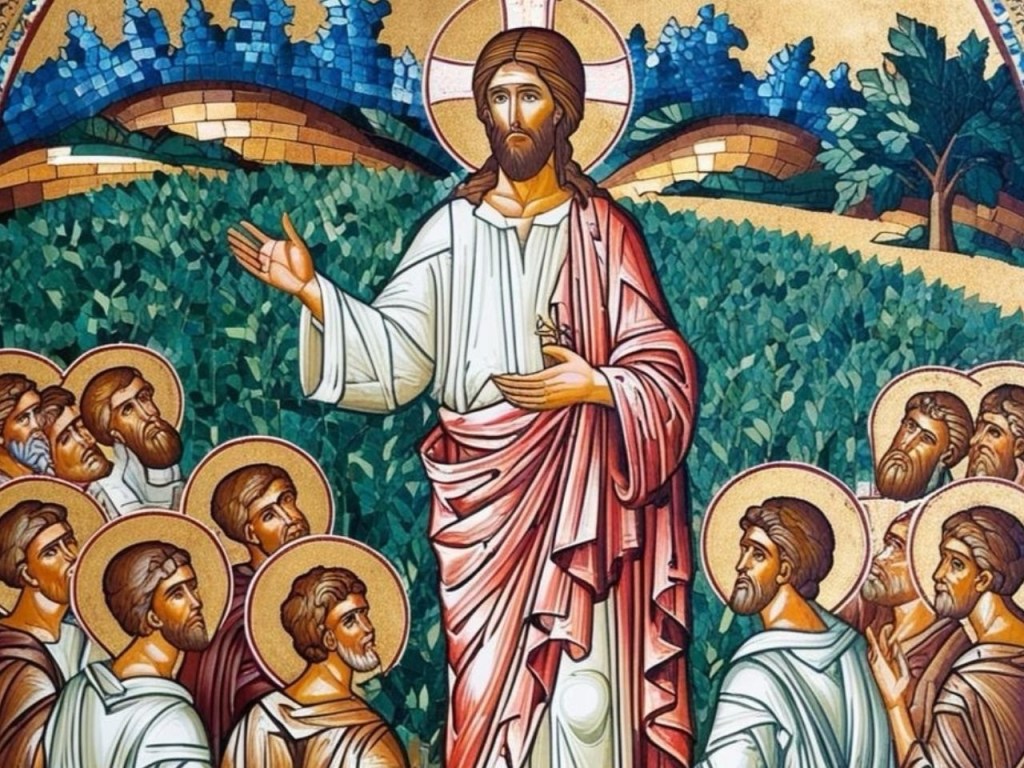
Here’s an excerpt from my online Bible Study. In this discussion of Luke 4, we delve into the second half of Luke 4:17-19, where Jesus reads from Isaiah’s prophecy and declares His Messianic mission. The passage states that the Spirit of the Lord is upon Jesus, anointing Him to preach the Gospel, heal the broken-hearted, deliver the captives, and give sight to the blind. In this discussion, we link Jesus’ mission to the concept of the Jubilee Year, a time of liberty and restoration in Israel, symbolizing the Messianic reign.
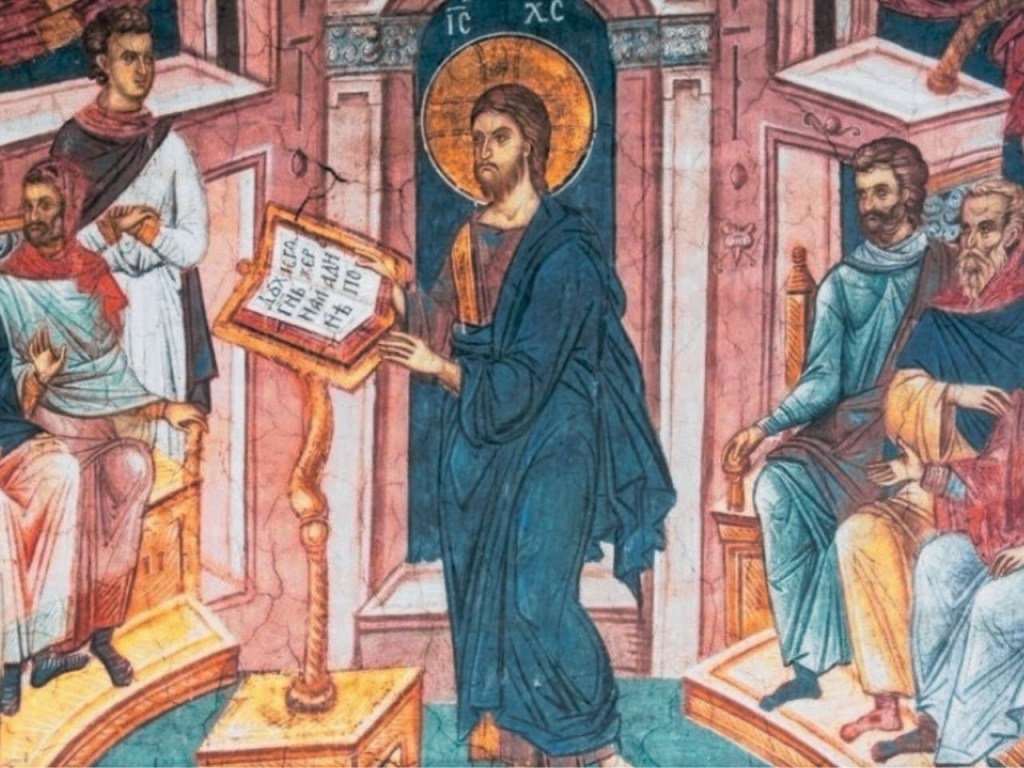
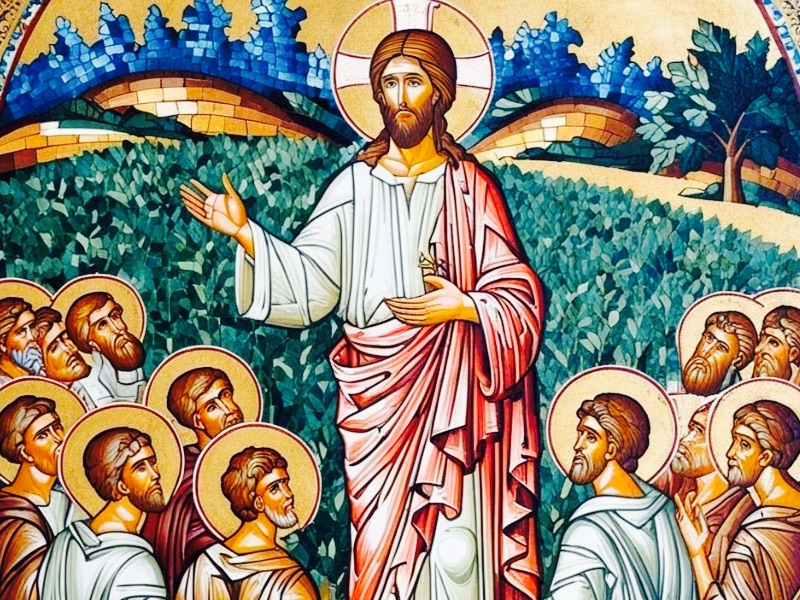
In this excerpt from my online Bible Study, we explore Luke 4:14-15, where Jesus returns to Galilee empowered by the Spirit and begins teaching in synagogues, earning widespread praise. Saint Ephraim the Syrian and Origen emphasize Jesus’ spiritual power and the significance of teaching within the synagogue. The discussion highlights the centrality of the worshiping community in experiencing and learning the faith. The episode concludes with a reflection on facing temptations with God’s strength and becoming ambassadors of His grace.
Just as Jesus faced 40 days of temptation after His baptism, we too can expect spiritual struggles when we get serious about our faith. Being in the wilderness isn’t a sign of failure.
When we give our lives over to Christ, one of the first places He begins working is in the people we meet. It’s easy to say, “Thank you, God, for bringing this person into my life,” when someone is helpful, supportive, and inspiring. But what about those people who test our patience, who annoy us, or who we’d rather avoid? Can we still say, “Thank you, God, for bringing this person into my life”? Every person Christ sends our way is there for a reason—either so we can serve Christ through them, or so we can learn something about ourselves that’s needed for our spiritual healing and growth. “As iron sharpens iron, so one person sharpens another.” (Proverbs 27:17) Whether a person brings us joy or frustration, every encounter is a chance to break free from our egos and selfishness, and to truly live for others. The only thing we need to ask God is for the wisdom to discern why He brought us together. Even those who annoy or persecute us are there to teach us compassion, kindness, and forgiveness. They help us learn to deal with negative emotions without letting bitterness take root. And sometimes, we’re the ones God has sent into someone else’s life to help them grow in patience and love.
What do we mean in the Eastern Orthodox Church when we talk about the fear of God? The following quotes offer important insights into this question. Saint Dorotheos of Gaza wrote: “A godly man fears and keeps to God’s will, not for fear of punishment or to avoid condemnation, but because he has tasted the sweetness of being with God, and fears he may fall away from it. He fears to be turned from it.”
Saint Theodorus the Great also writes: “The greater our longing for God, the greater grows our fear. And the more we hope to attain God, the more we fear him. For as nothing is more blessed than to attain God, so nothing is more terrible than this great fear of losing him.”
The 20th-century elder, Elder Thaddeus of Vitovnica, said: “The fear of God is when you love him, when you truly love him with all your heart, and you strive never to offend or sadden him—not only with your deeds, actions, and words, but also with your thoughts. You try to please him in everything you do or say. That is the fear of God, the fear of doing anything that might sadden or offend our parents.”
And in the book The Mountain of Silence, Kyriakos Markides sums it up like this: “The fear of God of the saints refers to the fear of losing their connection with God, the divine lover, not the fear of a patriarchal despot who rules over the universe with an iron fist.”
We do not have, in the Eastern Orthodox Church, the image of God as Zeus—a powerful, mighty being waiting for people to mess up so he can lower the boom on them. For us, the fear of God arises when we realize, even if just for a moment, the beauty and fulfillment we find in communion with God. Then, we do not want to lose this Divine connection, and we do not want to conduct ourselves in a way that would result in losing it.
It is the fear of losing God, not the fear of God himself.
Whenever I post something like this, at least a couple of people respond with the quote, “The fear of the Lord is the beginning of wisdom.” These words are repeated several times in the scriptures. One place we find them is in Proverbs 9:10. And yes, the fear of God is the beginning of wisdom. It can be an effective wake-up call and a good starting point. It is the natural response of a humble heart before the Lord, his saints, and his angels.
But it is not a place that God expects us to be stuck in forever. He does not need us to fear him. And we remember that in the scriptures whenever an angel visits someone and the person is afraid, what is the first thing the angel says? “Don’t be afraid.”
St. Anthony the Great, referencing 1 John 4, said: “I no longer fear God, but I love him, for perfect love casts out fear.”
So, fear can be a starting point for us. It can be what we need to take this whole thing seriously, but it is not where we must remain. It is a beginning, but ultimately everything must be driven by love.
Because frankly, if the reason I come to church, pray, read the Bible, and do all these things is simply because I am afraid of being punished, then I am making it about me. I do not want to get punished, so that is why I am doing these things.
In truth, our motivation should be the love of God and the desire for an intimate fellowship with him unto the ages of ages.
Much has been written about the Lord’s Prayer and you can find hours and hours of podcast episodes on it. It’s worth taking the time to look these sources up (this lecture by Fr. Thomas Hopko is a great place to start).
St. John Chrysostom said:
The Lord teaches to make our prayer common, in behalf of our brethren also. Because he does not say: “My Father, in Heaven,” but, “Our Father,” offering up his supplications for the body in common, and in no way only looking out for his own good, but looking out in all things for his neighbor’s good. And by this he at once takes away hatred, and quells pride, and casts out envy, and he brings in selfless love – the mother of all good things, and exterminates the inequality of human things…
What St. John is pointing out is that we don’t say, “My Father,” we say, “Our Father.” The Lord’s Prayer is the great equalizer in Christianity. Regardless of our race or cultural heritage, of our station in life, or of any other demographic into which we can be separated, we are all united in calling God: Our Father.
An ancient Christian saying states that “One Christian is no Christian.” Christianity is relational at its core. The word for Church in the New Testament, “ecclesia,” literally means a people called together. This is how the Lord Jesus Christ defines his people: as one Body, united by his grace.
In my journey through life, I don’t walk alone. I walk together with all of my brothers and sisters, untied through Christ as a family of faith, children of Our Father in heaven.
In John 3 Jesus says that we need to be “born from above” (“born again”) “of water and Spirit”. In this video, we learn about the Eastern Orthodox Church’s understanding of the birth of the Holy Spirit. We discover that the roots of this belief are found in the earliest days of Christianity.
Agape is selfless love – a love that seeks nothing for itself and gives everything for the sake of the other. This is the love of Christ, who gave up his own life so that we may live forever.
True selfless love goes beyond seeking recognition for what we have done or expecting gratitude or repayment in return. It is not a tool to leverage favors in the future, nor is it reserved for those who have earned our affection in the past. Instead, genuine selfless love flows freely, reflecting the boundless and unconditional love of God. It means acting because we recognize a divine opportunity to reflect the love of Jesus Christ – a love that calls us to care for others as He has cared for us.
When we embrace this kind of love, our actions and words become a living testimony of Christ’s love. As we show kindness, extend forgiveness, or offer help to others, we open the door for them to encounter Christ’s presence through us. As 1 John 4:19 reminds us, “We love because He first loved us.” This truth underscores the foundation of our lives as followers of Jesus Christ.
To bear the name of Christ is to carry His love into the world. It is to make visible the invisible God by allowing His love to shine through our deeds, even when no one notices or thanks us. In doing so, we fulfill His command to love others as He has loved us. By being ambassadors of his Christ’s this love, we glorify Him and share the hope of salvation with others.
There are a number of times in the Old Testament when God condemns Israel for their sins. And he says, “Because of your sins, the land is defiled.”
In Hosea 4:1-3, we read, “Hear the word of the Lord, you Israelites, because the Lord has a charge to bring against you who live in the land: ‘There is no faithfulness, no love, no acknowledgment of God in the land. There is only cursing, lying and murder, stealing and adultery; they break all bounds, and bloodshed follows bloodshed. Because of this the land mourns, and all who live in it waste away; the beasts of the field and the birds of the air and the fish of the sea are dying.'” What we focus our attention on matters… immensely. We give agency to the things we are most attentive to. These things gain a place of primacy in our minds and hearts. Eventually they shape our worldview and our character. By extension, our worldview and character impact our relationships with others, with our environment, and of course with God.
When we focus on toxic things, anger and bitterness and revenge and jealousy and all of these things, that has a negative impact on our hearts, on our families, on our communities, and on the world itself. So we need to focus on life-giving things. When Dostoevsky said that “beauty will save the world,” this is what he was talking about.
If we want to make the world a better place, we can start by paying attention to what St. Paul says in Philippians 4: whatever is good, whatever is holy, whatever is honorable, whatever is true, he says, “Meditate upon these things.” Pay attention to these things.




 Eastern Orthodoxy