Predestined for Glory


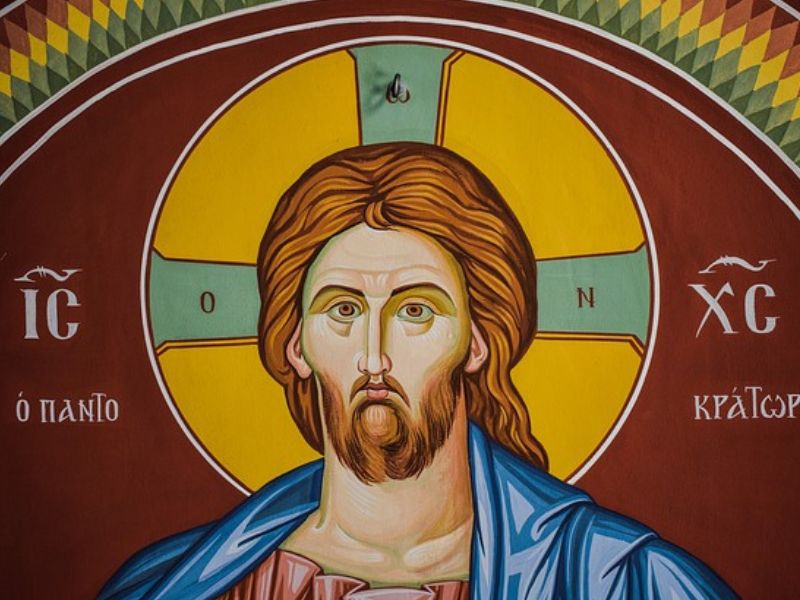
In my sermon at St Nicholas Cathedral in Fort Wayne, Indiana, on Sunday, September 24, 2023, we looked at how the Orthodox Church understands Romans 8:29 – “For whom He foreknew, He also predestined to be conformed to the image of His Son…”
__

Help keep my ministry going and growing… Buy me a coffee → https://www.buymeacoffee.com/frajarmus ☕️

Healing the wounds of Babel


The Greek word for the devil is “diavolos,” which is where we get the word “diabolical” from. This word literally means one who throws things in opposite directions, and this offers us insight into the work of the devil among humanity — to create division.

One the other hand, God calls us to unity. In Christ all fragmentation due to sin is healed. For example, in the Orthodox Church, we make a juxtaposition between what happens at the Tower of Babel and what happens at Pentecost:

The arrogance of those who built the tower caused the tongues to be confused, but now the tongues have been made wise through the glory of the knowledge of God! There the impious were condemned, now Christ has enlightened the fishermen with His Spirit! There the confusion of tongues was done in retribution; now harmony is restored for the salvation of our souls! (Pentecost Vespers)

At the Tower of Babel, because of the pride of the people we get the division of the tongues – the fragmentation of humanity. At Pentecost, the Holy Spirit comes down in the form of tongues of fire and brings people together in the unity of the Church. The apostles go out and preach the good news, and people from various places speaking various languages can hear the gospel each in their own language.

The power of God, the work of God, the saving work of Jesus Christ, and the operation of the Holy Spirit brings us together. Out of discord, we get concord through God. What happens at the Tower of Babel because of pride is overcome, is healed by the humility and the service and the willingness to follow God of of the apostles and disciples on the day of Pentecost.

Love in Christ,
+FrAJ

The two types of people who’ll be saved


One of my favorite Eastern Orthodox authors is Metropolitan Anthony Bloom. And my favorite book written by Metropolitan Anthony is “Living Prayer.” Unfortunately it’s not so easy to find copies of it anymore as, I believe, it is our of print. If you can’t find it, I’d recommend another of his books on prayer, “Beginning to Pray.”

“Living Prayer” is not a long book, but it just offers some beautiful insights into having a healthy — a living! — prayer life. One of the chapters includes a quote from St Ambrose of Optina concerning the Last Judgment. It’s a reminder about the importance of humility in our spiritual life. I remember when I first read this quote, it just gave me much hope and encouragement in my own spiritual life. Here’s Metropolitan Anthony, quoting from St Ambrose:

“Ambrose of Optina, one of the last Russian Staretz, said once that two categories of men will attain salvation: those who sin and are strong enough to repent, and those who are too weak even to repent truly, but are prepared, patiently, humbly and gratefully, to bear all the weight of the consequences of their sins; in their humility they are acceptable to God.”

What wonderful words to hold onto as we struggle with our own sins, particularly our habitual sins. Ultimately the thing that opens the floodgates of God’s mercy is that we embrace a humble heart.

Before and above all else, may we cultivate a spirit of humility. Anybody who can cultivate that spirit, anybody who can go through their lives with a humble heart, is capable of salvation and eternal joy.

Love in Christ,
+FrAJ

“As yourself”


“Blessed are you, O Lord, teach me your statutes!” This quote from Psalm 118 is often repeated in Orthodox worship. There’s even a hymn in our morning service, Matins, built around it.

Thinking about God’s statutes might seem pretty daunting. In Judaism, in addition to the Torah, there were over 600 Commandments known as “Mitzvot,” acts that resulted in God’s blessing when fulfilled. So when people ask Jesus about the greatest commandment they’re not always trying to trip him up. Sometimes this question was driven by a sincere desire to know. Thankfully, Jesus gave us a way of streamlining the issue.

When asked about the greatest commandment, Christ offers two that are closely related: “You shall love the Lord your God with all your heart, with all your soul, with all your strength,” and, “Love your neighbor as yourself.”

Before we go on, we should note that these two commandments do not appear in sequence in the scriptures. “Love God…” is from Deuteronomy 6, and “Love your neighbor…” is from Leviticus 19.

We often misread that second commandment as “Love your neighbor as you love yourself.” That’s not what it says. It says love your neighbor “as yourself.” That’s an important distinction because it’s not just about treating others the way you would treat yourself. Actually, it zeroes in on the fact that all human life is intricately linked.

We need to look at our neighbors’ lives, their joy, their pain, as extensions of our own lives. The second great commandment reminds us that we’re all connected. Whether we are aware of it or not, every life has an impact on the lives of others.

Love in Christ,
+FrAJ