“I Believe”

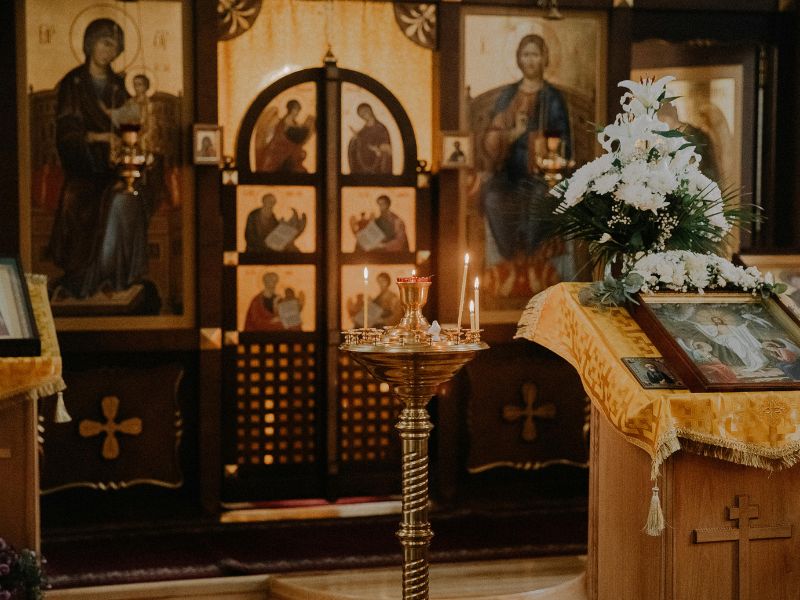
Looking over the text of the Divine Liturgy, we find very few “I” statements. The Liturgy is a communal act and the content of the prayers and hymns reflect this. There are, however, two notable exceptions. One is in the Creed and the other is the prayer that we read immediately before Holy Communion. Both of these sacred texts begin with the words “I believe.”
By saying “I believe,” we are making a personal confession of faith, aligning ourselves with the collective belief of the Church, first proclaimed by the holy apostles. “I believe” is not an abstract statement—this is the language of conviction, trust, and relationship.
We don’t say “I think” or “I theorize,” but “I believe.” In the New Testament, belief is never just intellectual agreement. It is an act of entrusting ourselves to God. St. Paul says clearly, “If you confess with your mouth that Jesus is Lord and believe in your heart that God raised Him from the dead, you will be saved” (Romans 10:9). To believe with the heart is to place our whole life in God’s hands. We hear this invitation over and over again in the Divine Liturgy: “…let us commend ourselves and each other and all our life to Christ our God.”
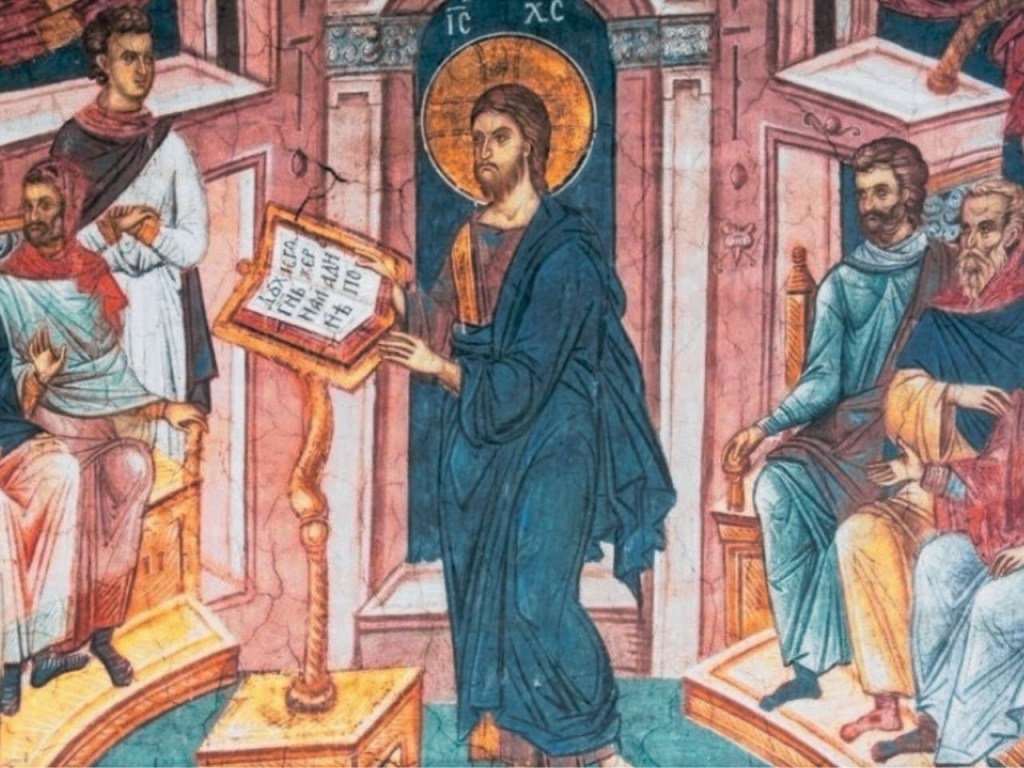
The Lord Himself connects belief with life. In John 11:25–26, standing at the tomb of Lazarus, Jesus says, “I am the resurrection and the life. Whoever believes in Me, though he die, yet shall he live, and everyone who lives and believes in Me shall never die. Do you believe this?” The question He asks Martha is the same He asks each of us when we begin the Creed and then again as we approach the Holy Eucharist: Do you believe this?
Where it all began

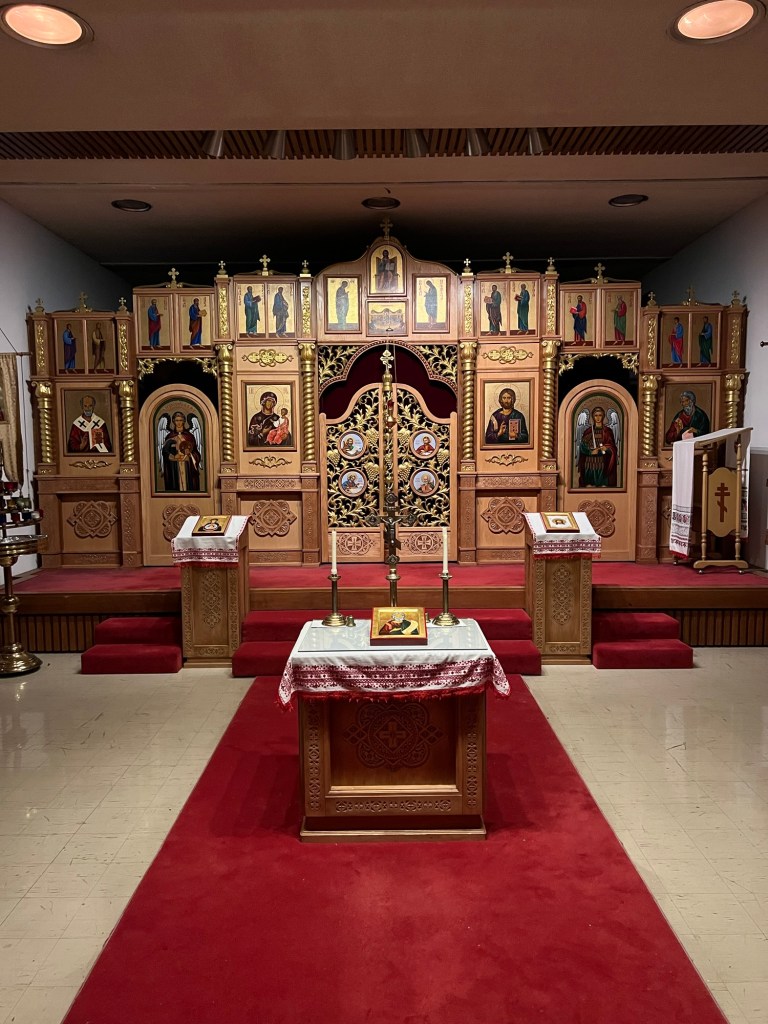
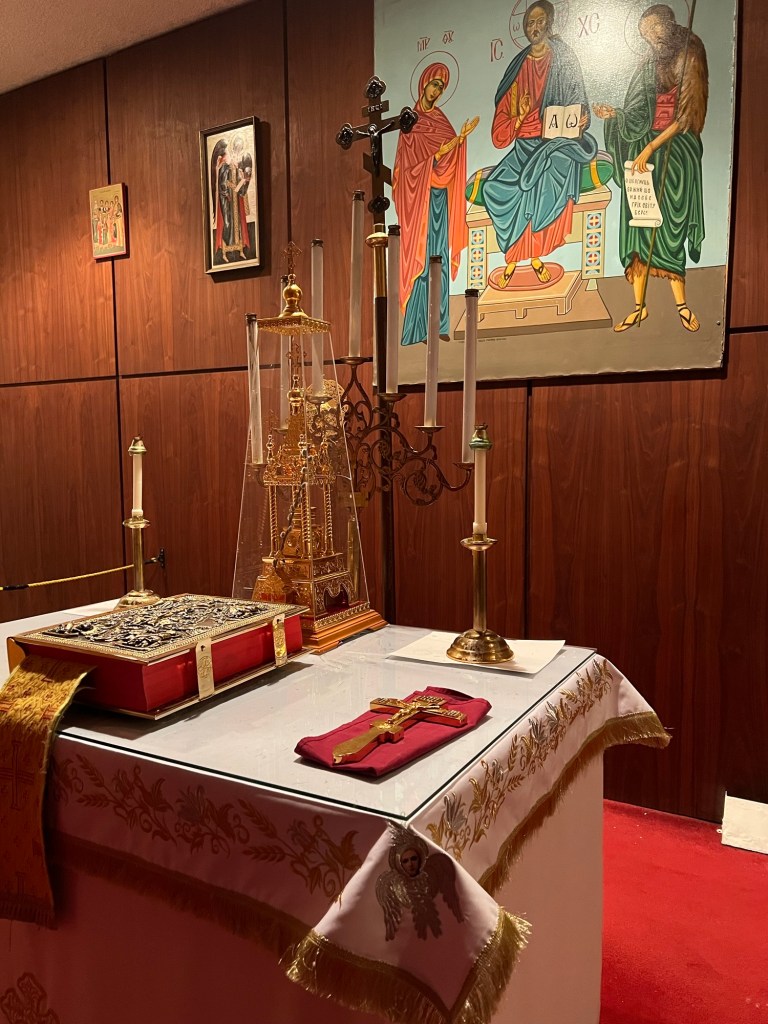
Recently, I had the pleasure of visiting my Alma Mater, St. Andrew’s College, in Winnipeg, Canada. It’s been years since I’ve been back to the seminary. As always, the place I’m drawn to is the chapel. This is where I entered for the first time into the routine of the daily services, together with festal celebrations and the profound beauty of our seasonal liturgical life. These services, so filled with divine and life-giving rhythms and patterns, flow like a peaceful yet powerful river both through the Church year and through our own hearts.

Exploring the Messianic Fulfillment in Luke 4:17-19


Here’s an excerpt from my online Bible Study. In this discussion of Luke 4, we delve into the second half of Luke 4:17-19, where Jesus reads from Isaiah’s prophecy and declares His Messianic mission. The passage states that the Spirit of the Lord is upon Jesus, anointing Him to preach the Gospel, heal the broken-hearted, deliver the captives, and give sight to the blind. In this discussion, we link Jesus’ mission to the concept of the Jubilee Year, a time of liberty and restoration in Israel, symbolizing the Messianic reign.

Unpacking the Prayer “Lord, Have Mercy”


Visit an Eastern Orthodox worship service, and you’ll see how much we love the prayer, “Lord, have mercy.” In this short phrase, we find everything we need in our prayers.

We call God “Lord.” This word may not carry the same weight for us in the modern world, but in biblical times, to call someone “Lord” was to acknowledge their authority over our lives. By addressing God as Lord, we are declaring our obedience and allegiance to Him as the one who is truly in charge.

Next, we ask for His mercy. Understanding the ancient meaning of this word deepens our prayer. In Hebrew, the word for mercy is hesed, which can also be translated as “steadfast love.” For example, in the Psalms, you might see “God’s mercy endures forever,” or in other translations, “God’s steadfast love endures forever.” Both phrases translate the same Hebrew word. To call upon God’s mercy, then, is to trust ourselves to His loving embrace.

In Greek, the word is eleos. There is only a one-letter difference between eleos (mercy) and eleon (olive oil). This connection is significant. In the Old Testament, olive oil was poured over the heads of kings, prophets, and priests during their anointing. This ritual symbolized that, by themselves, human beings are insufficient for these ministries, but through God’s wisdom and strength—His grace—they are able to fulfill their calling. Even today, in the Orthodox Church, we pray that God’s grace will “fill that which is lacking and heal that which is broken” during ordination.

Olive oil, then, becomes a symbol of God’s strength and wisdom. In the story of Noah, the dove returns with an olive branch, signaling that the floodwaters are receding and that God is offering humanity a new beginning—a chance for renewal. Olive oil was also used in the ancient world as a salve to heal wounds, protecting and cleansing them. This, too, reflects God’s mercy as His healing grace.

When we pray, “Lord, have mercy,” we are asking God for the most essential gifts: His strength and wisdom, His forgiveness, and His healing grace. All of these flow from His steadfast love for us, enabling us to embrace and live out the gift of salvation given to us by Jesus Christ, every day of our lives.

Echoes of Heaven


For first-time visitors to an Orthodox Church, one of the most striking aspects of the worship experience is the absence of musical instruments. This isn’t merely a stylistic choice; it’s a deliberate theological expression rooted in the history and beliefs of Eastern Orthodoxy.

The roots of Eastern Orthodoxy trace back to the earliest Christian communities, offering worship practices that have remained consistent for nearly two millennia. Historically, early Christians were influenced by Jewish synagogue practices, which had already moved away from instrumental accompaniment by the first century AD. The Early Christians associated instruments with pagan rituals and secular entertainment, leading them to favor a cappella singing as a way to distance themselves from these practices.

In Eastern Orthodoxy, the human voice is considered the perfect instrument. Created as we are in God’s image, our voices are seen as the purest form of musical expression. When Orthodox Christians sing, they are not merely performing music; they are offering their very breath as prayer. The voice, emerging from within the body, symbolizes prayer rising from the heart.

The term “Orthodox” itself is significant, with “doxa” meaning glory in Greek. This word carries two meanings: to praise and to make clearly known. The human voice is believed to be the most perfect way to offer God glory, as it allows for both praise in words and music and the proclamation of Christ’s Gospel through hymns and chanted prayers.

Orthodox worship aims to create an “icon of sound,” a window into heaven, not only through what is seen but also through what is heard. The unadorned human voice captures the essence of angelic worship. In a world increasingly dominated by electronic and produced sound, there is something refreshingly authentic about spaces where human voices alone fill the air.

Through psalms, hymns, and spiritual songs, Orthodox Christians offer praise to God and make His truth — that truth that sets us free — known to all who experience the timeless, angelic beauty of the Orthodox Christian liturgy.

The Holy Mystery of Matrimony


​Too Big for Words – Part 7

In this message from our Holy Mysteries sermon series, we reflect on the Holy Mystery of Matrimony. In the Orthodox Tradition, a marriage is a sacred offering—brought into the church for God’s blessing, like Jesus blessing the marriage in Cana of Galilee by performing his first miracle there, turning water into wine.

The Anointing of the Sick


Too Big for Words – Part 6

In this sixth installment of my sermon series on the Holy Mysteries – the sacraments – he discussed the Mystery of Holy Unction. “Is any among you sick? Let him call for the elders of the assembly, and let them pray over him, anointing him with oil in the name of the Lord.” (James 5:14)

The Liturgy that Matters Most


Human beings are innately liturgical creatures, woven with a profound spiritual thread that draws us toward communal worship. We possess a deep-seated yearning within our souls to assemble together for the sacred work of offering prayer and devotion to God with one voice and one heart. This fundamental aspect of our humanity manifests so essentially that when authentic liturgy is absent from our lives, we inevitably seek substitutes to fill this spiritual void. As Ecclesiastes 3:11 reminds us, “He has made everything beautiful in its time. He has also set eternity in the human heart.”

Various secular gatherings—rock concerts, political rallies, social protests, and sporting events—all bear the unmistakable hallmarks of liturgical practice. At these events, people congregate in designated spaces for shared purposes and experiences. They unite their voices in songs and chants, perform synchronized physical gestures, and participate in communal rituals that reinforce their collective identity and belonging. The parallels to religious liturgy are striking and reveal our inherent need for sacred community.

This observation isn’t meant to discourage participation in such cultural events. By all means, attend sporting competitions, concerts, and other gatherings that interest you and bring joy to your life. However, it’s crucial to maintain perspective about what these experiences offer. While secular gatherings may indeed celebrate important dimensions of human existence and community, they ultimately provide only a partial reflection of our complete humanity.

There exists only one Liturgy that enables us to participate in the fullness of human life in its most transcendent sense. As Psalm 36:9 beautifully expresses, “For with you is the fountain of life; in your light we see light.” The Divine Liturgy, celebrating our Lord and God and Savior Jesus Christ, connects us directly with the source of all light and life itself. It’s through this sacred Communion that we experience not just an echo of transcendence but genuine participation in the Divine life.

The Divine Liturgy stands apart because it doesn’t merely commemorate human achievement or cultural identity but invites us into relationship with the Creator who fashioned us for communion with Himself. In this sacred assembly, we don’t simply encounter feelings of transcendence but encounter the transcendent One who gives meaning to all other human experiences and gatherings. This liturgical participation fulfills our deepest spiritual longings in ways that even the most meaningful secular gatherings cannot ultimately satisfy.

Explaining the Divine Liturgy (Part 2)


Here’s the second half of a discussion on the Eastern Orthodox Divine Liturgy. I structured it around an early second century description of a Christian Eucharistic service, written by St. Justin the Martyr:

  • “On the day called Sunday, all gather together to one place…
  • “And the memoirs of the apostles or the writings of the prophets are read…”
  • “Then the president verbally exhorts to the imitation of these good things…”
  • “Then we all rise together and pray…”
  • “Bread and wine and water are brought forth…
  • “The president offers prayers and thanksgivings… and the people give their ascent, saying: Amen…”
  • “There is a distribution to each of that over which thanks has been given…”
  • “And they who are well to do give what each thinks fit to take care of all who are in need.”

__

Help keep my ministry going and growing… Buy me a coffee → https://www.buymeacoffee.com/frajarmus ☕️

Many thanks for your support! Prayers & Blessings 🙏 ☦️

Explaining the Divine Liturgy (Part 1)


Here’s the first half of a discussion on the Eastern Orthodox Divine Liturgy. I structured it around an early second century description of a Christian Eucharistic service, written by St. Justin the Martyr:

  • “On the day called Sunday, all gather together to one place…
  • “And the memoirs of the apostles or the writings of the prophets are read…”
  • “Then the president verbally exhorts to the imitation of these good things…”
  • “Then we all rise together and pray…”
  • “Bread and wine and water are brought forth…
  • “The president offers prayers and thanksgivings… and the people give their ascent, saying: Amen…”
  • “There is a distribution to each of that over which thanks has been given…”
  • “And they who are well to do give what each thinks fit to take care of all who are in need.”

__

Help keep my ministry going and growing… Buy me a coffee → https://www.buymeacoffee.com/frajarmus ☕️

Many thanks for your support! Prayers & Blessings 🙏 ☦️